Why a Party System Could Make Death Stranding 2's Deliveries More Dynamic
Death Stranding sequel multiplayer and party system could transform the solitary, strategic journey into a dynamic, shared adventure.
Let me tell you, trekking across that fractured America as Sam Porter Bridges was a journey like no other. It was beautiful, haunting, and, I'll be honest, sometimes it felt like I was the only soul for miles—which, story-wise, was kinda the point. But after hundreds of hours spent balancing packages and dodging BTs, I started dreaming of a little company. You know, someone to share the load, literally. With whispers of a sequel on the horizon, my mind keeps circling back to one idea: what if Sam didn't have to walk alone?
The core of the first game was this profound, solitary pilgrimage. The world demanded patience, every step a deliberate choice. The multiplayer was this ghostly, brilliant network—seeing another player's ladder when you needed it most felt like a miracle. But managing those delivery bots? Pfft, don't get me started. They were more like a thought experiment than real help. A proper party system, though... that could change everything without losing the soul of the journey.
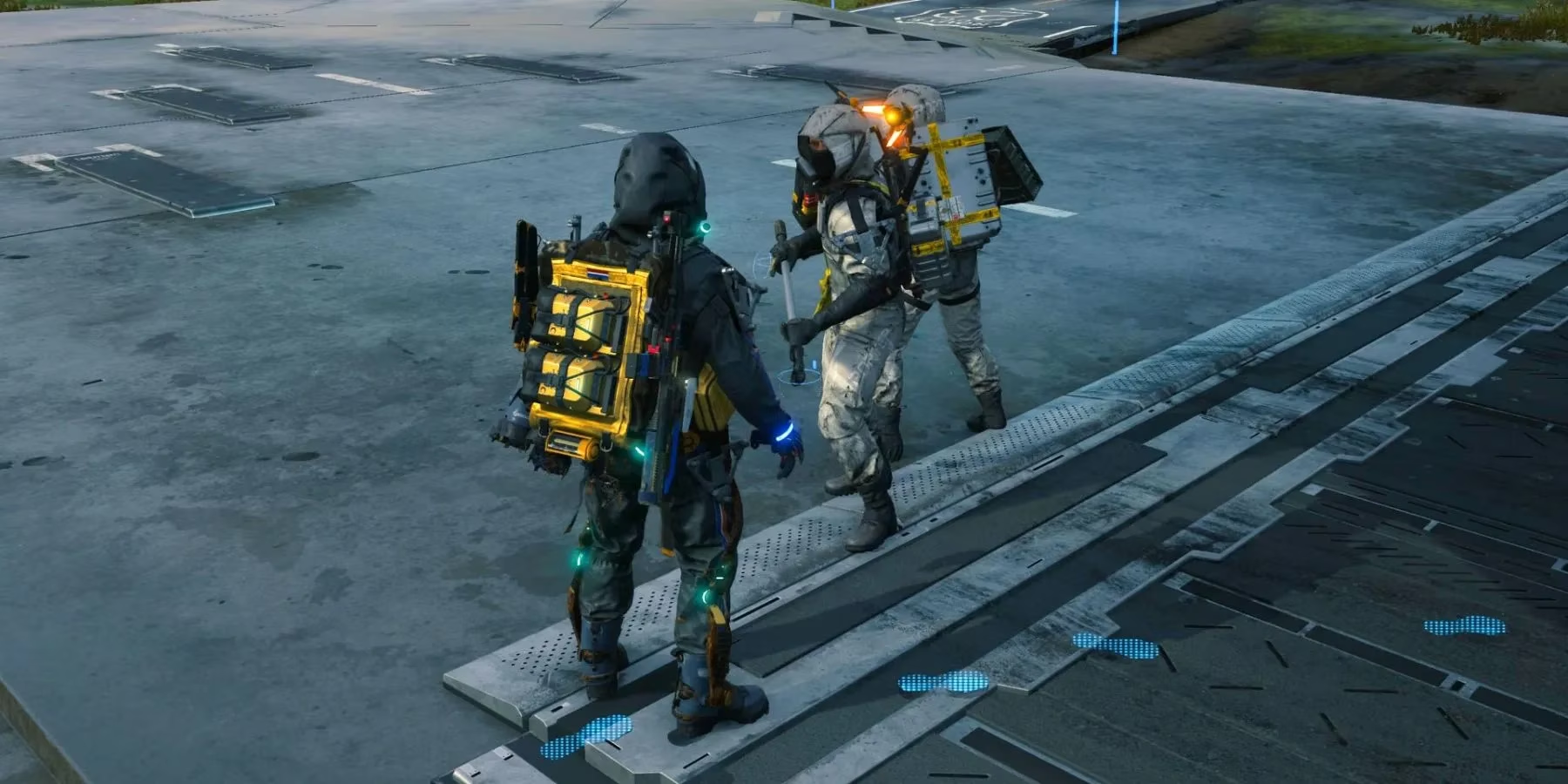
Sharing the Burden, Expanding the World
Imagine this: you get a massive order from the Capital Knot City to the Mountain Knot City. The cargo is enormous—enough to make even Sam, the legendary porter, stagger. Instead of making ten trips yourself, what if you could assemble a team? You could:
-
Distribute the load: Split the order among several porters, each taking a different, optimized route.
-
Specialize roles: One porter carries heavy machinery, another handles fragile chiral-artifact samples, and a third scouts ahead for BT territory.
-
Conquer the map faster: With a team, you could theoretically make deliveries to the West Coast and the Central Region simultaneously. Rebuilding America wouldn't just feel like a metaphor; it would feel like a coordinated effort.
It just makes sense. Sam is the best, so in a sequel, his legend should grow. His new privilege? Building and leading a porter network. It would turn the delivery management from a solitary checklist into a strategic operation.
More Than Just Carrying Boxes: A New Combat Dynamic
Now, let's talk about the real scary parts. Remember those massive BT boss fights? The air would go still, the rain turned to tar, and this... this thing would rise.
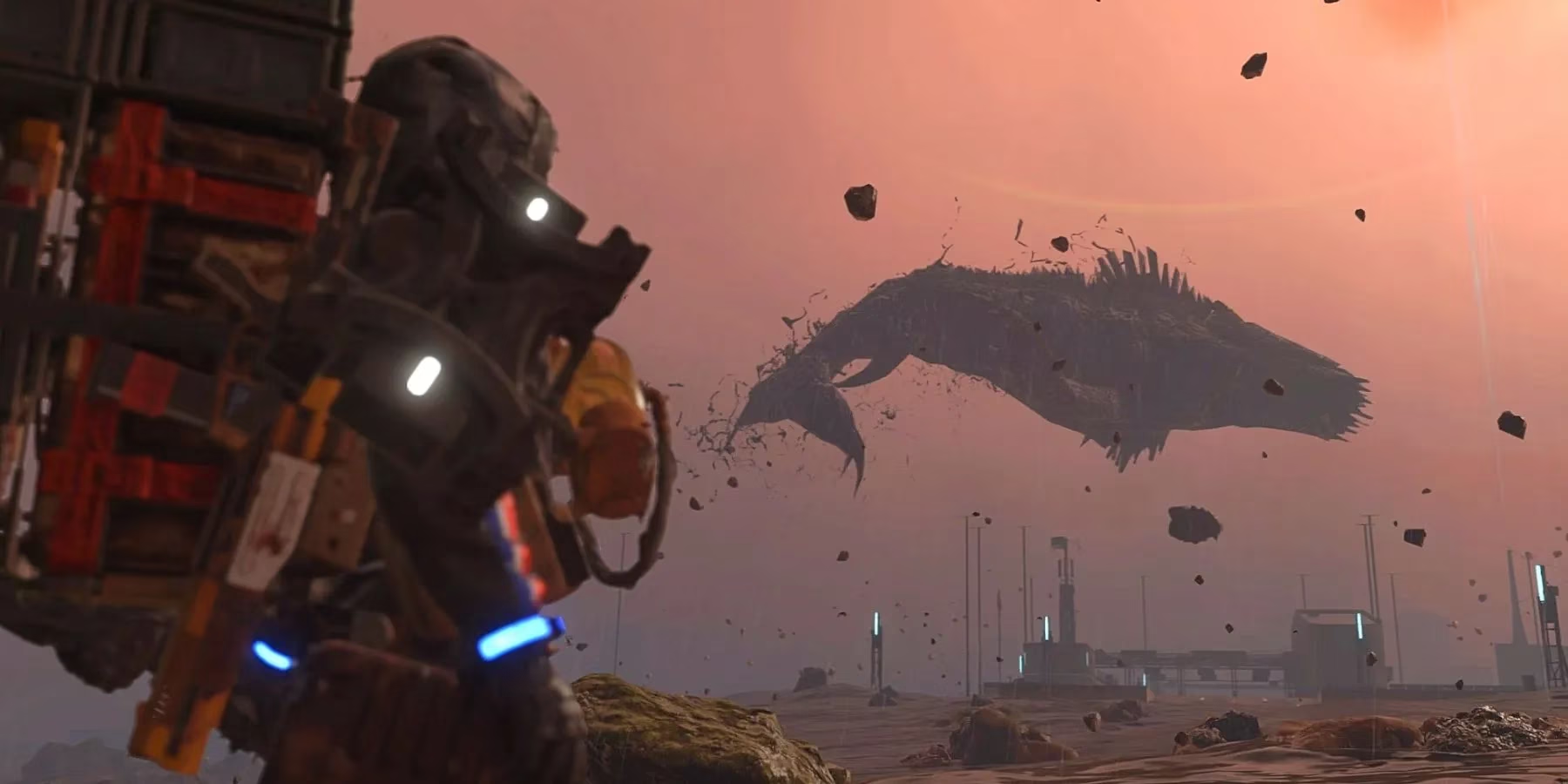
In those moments, you were desperately scrambling for blood bags and weapons left by other players' holograms. But with a party? The whole dynamic shifts. You're not a lone survivor anymore; you're a squad leader.
| Solo Sam | Sam with a Party |
|---|---|
| Scavenge for resources mid-fight | One member distracts the BT while others gather supplies 🧪 |
| Limited weapon arsenal | Coordinated attacks with different weapon types 💥 |
| Pure survival | Tactical gameplay and strategic positioning 🧠 |
Fighting a catcher BT could become a ballet of coordinated strikes instead of a frantic scramble. One porter lays down covering fire with hematic rounds, while another flanks to throw grenades made from chiral crystals they just collected. It adds a layer of strategy that the first game only hinted at.
Answering the Critics (Without Losing the Magic)
Look, we've all heard the "walking simulator" tag. And for some deliveries, sure, the meditative pace was the point. But for others... it was a drag. A party system could be the elegant solution.
It wouldn't remove the essence of delivery; it would contextualize it. Sam becomes a nexus, a connector of people in more ways than one. Recruiting porters from different knots—the engineer from the Engineer, the veteran from the Veteran Porter—would make the world feel more alive. You're not just connecting facilities; you're building a community of fellow travelers.
The quiet moments would still be there. You'd still have those solo treks into unknown valleys for story missions. But when you return to your private room, you could check in on your team's progress across the continent, assign new routes, and see the chiral network strengthen in real-time. It turns the sometimes-tedious management into a rewarding meta-game of logistics and leadership.
So, as we look ahead to 2026 and the potential of a new journey, I'm not just hoping for new terrain or weirder monsters. I'm hoping for a hand to shake, a buddy to share a cryptobiote with, and a team to help shoulder the burden of rebuilding, one package at a time. The first game was about making connections. The next one could be about leading them.