When 100 Million Dreams Shipped
Sony's PS4 became the fastest console to ship 100 million units, setting a record sales milestone in 2019.
In the quiet hum of a summer afternoon in 2019, a young gamer named Alex scrolled through his news feed, coffee cooling beside the keyboard. The headline stopped him cold: Sony had just crossed a line no other console had reached so quickly. Over one hundred million PS4 units had left factories and found their way to store shelves around the world. Alex leaned back, letting the weight of that number settle. It wasn't just a box under his TV—it was a global tribe.
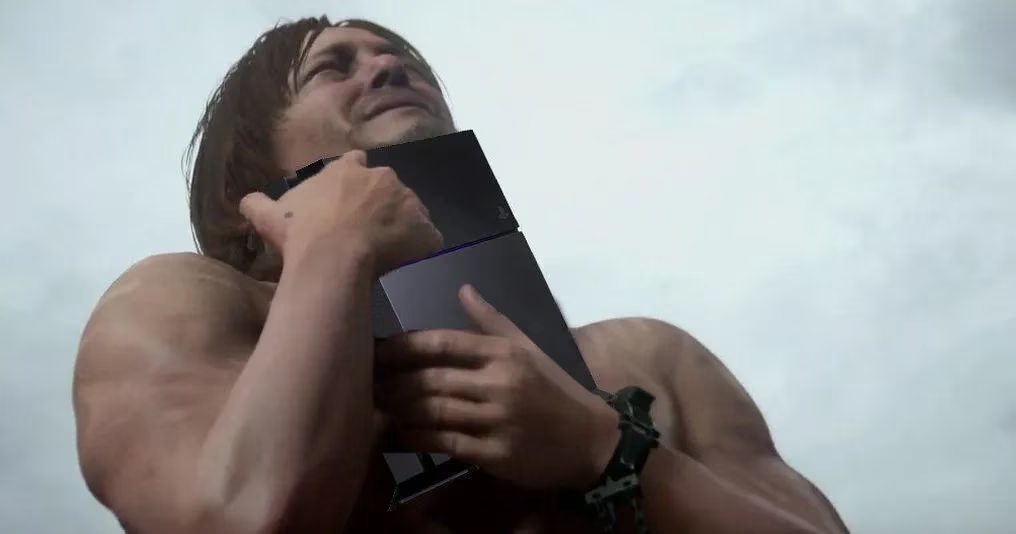
Sony’s financial report for the first quarter of fiscal year 2019 had revealed the milestone. In the three months ending June 30, 3.2 million fresh units had rolled into retail channels, nudging the lifetime total past the magic 100 million mark. The previous tally had stood at 96.8 million. This was the number sold to shops—not yet every one into a player's hands—but the signal was unmistakable. The PS4 had become the fastest console in history to ship 100 million units, snatching the crown from its legendary ancestor, the PS2, by a couple of months. Six years of relentless gaming had rewritten the record books.
Alex thought about his own journey. He remembered the launch night chaos, the weight of the DualShock 4 in his palms for the first time, the way Horizon Zero Dawn’s sunsets made him forget the outside world. He wasn’t alone. Thirty‑six million PlayStation Plus subscribers were paying for that same sense of connection, lobbing grenades in Destiny raids, trading turnips in Final Fantasy XIV, sharing their victories on social feeds. The console had become more than hardware—it was a second home.
Yet not everything in the report sparkled. Sony’s top brass, while celebrating the towering sales figure, were not entirely festive. Hardware shipments had stayed level compared to the same quarter a year before, but software sales had slipped. The company had trimmed its full‑year forecast by four percent. Even a juggernaut could feel the tremors of an aging generation. Whispers of the next PlayStation were already swirling, making some buyers hesitate. Alex understood the pattern—every hero grows a little weary before handing the torch. But a single game had the power to turn the tide. And that November, Death Stranding was coming.
The trailer played again in his memory: Norman Reedus cradling a phantom baby against a shattered landscape, a strange umbilical tether trailing behind him. Hideo Kojima’s first post‑Konami project felt like a promise, the kind of exclusive that could move millions of consoles all on its own. Alex imagined the quiet players, the ones waiting for just one reason to step into the PlayStation family. Perhaps this was it. A game about reconnecting a broken world might perfectly mirror the bonds the PS4 had already forged.
Now, in 2026, looking back from a world draped in the glow of the PS5, that 100‑million moment feels like a relic of a golden age—and yet, it still resonates. The PS4 did not stop there. It marched on, eventually cresting past 117 million units by the time the factories finally slowed. The lineage it began, with its emphasis on indie darlings, cinematic storytelling, and seamless online ecosystems, became the blueprint for its successor. Players still dust off their slimmer models to revisit Bloodborne’s Yharnam or the neon streets of Night City. They remember the midnight launch for Death Stranding, which, as it turned out, did give sales a notable kick, cementing Kojima’s strange creation as a must‑play artifact of the era.
That summer day in 2019, a milestone was more than a corporate slide. It was a moment when millions of soldiers, racers, and phantom-fetchers realized they belonged to the same story. The console war wasn’t just about plastic and silicon—it was about shared breath held during a boss fight, about a friend’s laughter over voice chat, about the quiet pride of watching a favorite machine outrun the ghosts of its own past. And as Alex logged off that afternoon, he did so with a rare, quiet smile. The fastest hundred‑million sprint in gaming history had just been run, and he had been there for every single step.