The Uncertain Future of Die-Hardman in Death Stranding 2
Exploring the compelling legacy of Die-Hardman in Death Stranding, this analysis questions his potential role in the highly anticipated sequel, Death Stranding 2, following his dramatic ascent to President.
As a longtime follower of Hideo Kojima's post-apocalyptic epic, I've spent considerable time reflecting on the characters who made the original Death Stranding so memorable. The narrative weight fell on a relatively small cast, each bearing complex histories and motivations. Among them, John Blake McClane, known to most as Die-Hardman, stood as a constant, guiding presence for both Sam Bridges and the player. His journey from a guilt-ridden soldier to the President of the United Cities of America was one of the game's most compelling arcs. Now, with Death Stranding 2 on the horizon for the PS5, I find myself pondering a crucial question: what role remains for a man who has seemingly reached the pinnacle of his story?
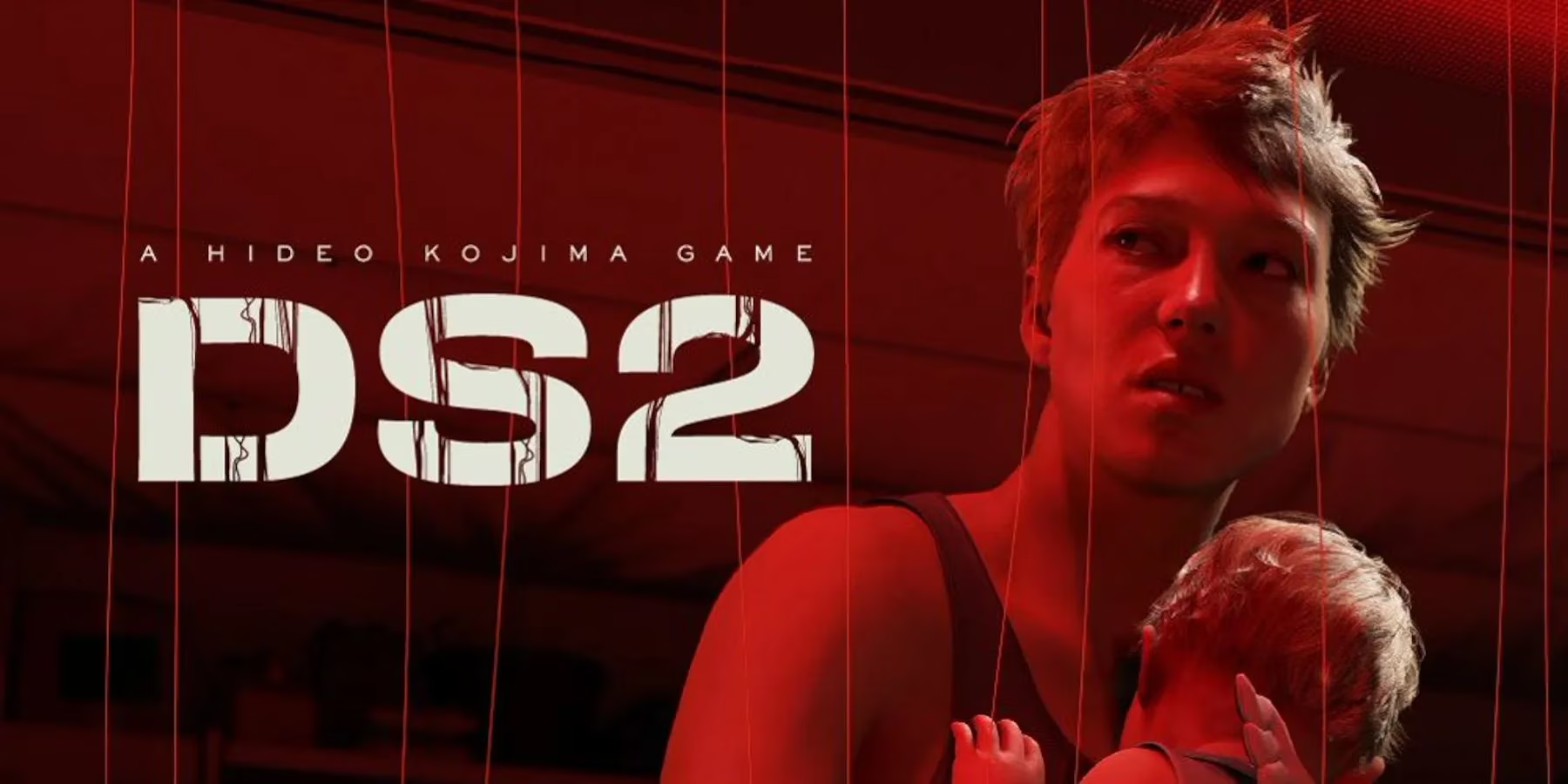
Die-Hardman's backstory is a tapestry of loyalty, betrayal, and profound regret. A former U.S. Army Special Forces operative under the command of the legendary Clifford 'Cliff' Unger, his life took a tragic turn. He discovered his former commander's infant son was being used in unauthorized Bridge Baby experiments. In a moment of solidarity, he aided Cliff in a desperate rescue attempt—a mission that ended in catastrophic failure. Forced by Bridget Strand to execute both Cliff and the child, John McClane was legally declared dead and reborn as 'Die-Hardman,' his iconic mask serving as both a disguise and a symbol of his shattered identity.
This history is what made his role in Sam's journey so poignant. He wasn't just a mission control operator; he was a man seeking redemption, guiding the son of the man he failed. His tutorials were more than gameplay mechanics; they were lessons from a veteran survivor. He taught us how to navigate a broken world:
-
Building essential structures like the invaluable Zip-line network.
-
The importance of connection through the 'like' system.
-
Gathering and managing precious resources for reconstruction.
Lore-wise, he was our primary historian, contextualizing the Death Stranding event and the world that existed before it. Without his steady, if sometimes strained, voice in our ear, the immense loneliness of the game would have been overwhelming.
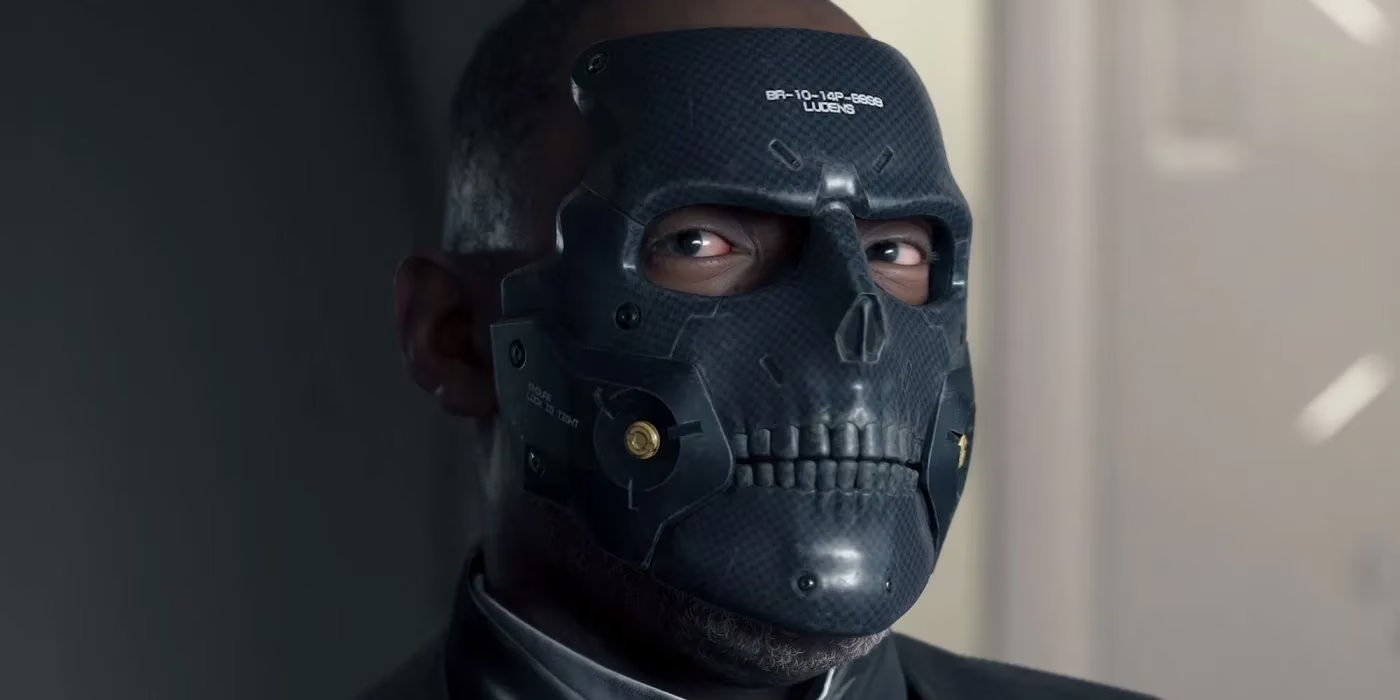
However, the conclusion of the first game fundamentally altered his station. In a climactic and emotionally charged sequence, Die-Hardman, consumed by a need for final justice, attempted to assassinate Amelie upon learning she was the extinction entity. Thwarted by the spectral intervention of Cliff Unger, he experienced a complete breakdown, confronting the ghost of his commander and the weight of his sins. From this catharsis, he emerged not as the hidden director of Bridges, but as the publicly anointed President of the United Cities of America. This promotion, while a narrative triumph, creates a significant logistical problem for his involvement in a sequel.
Let's be realistic. The President of a rebuilding nation, who also presumably oversees the massive logistics corporation Bridges, would not have the time to personally guide a single porter, even one as important as Sam Bridges. Sam himself is no longer the novice deliveryman; he's a seasoned veteran who understands the chiral network and the threats of the Beach. The need for the hand-holding tutorials Die-Hardman once provided has evaporated. This presents Kojima Productions with a narrative dilemma. Does the story invent a reason for the President to be back in the field, or does it gracefully retire him to a more ceremonial, off-screen role?
The thought of a diminished role for Die-Hardman is personally disappointing. Actor Tommie Earl Jenkins delivered a masterclass in performance capture, imbuing the character with a stoic authority that barely contained a deep well of vulnerability and pain. Jenkins's evident passion for the role made Die-Hardman feel authentically human in a world of cosmic horrors. To relegate such a performance to brief cameos or audio logs in Death Stranding 2 would feel like a missed opportunity. The character's arc feels complete, but his presence is too valuable to simply discard.
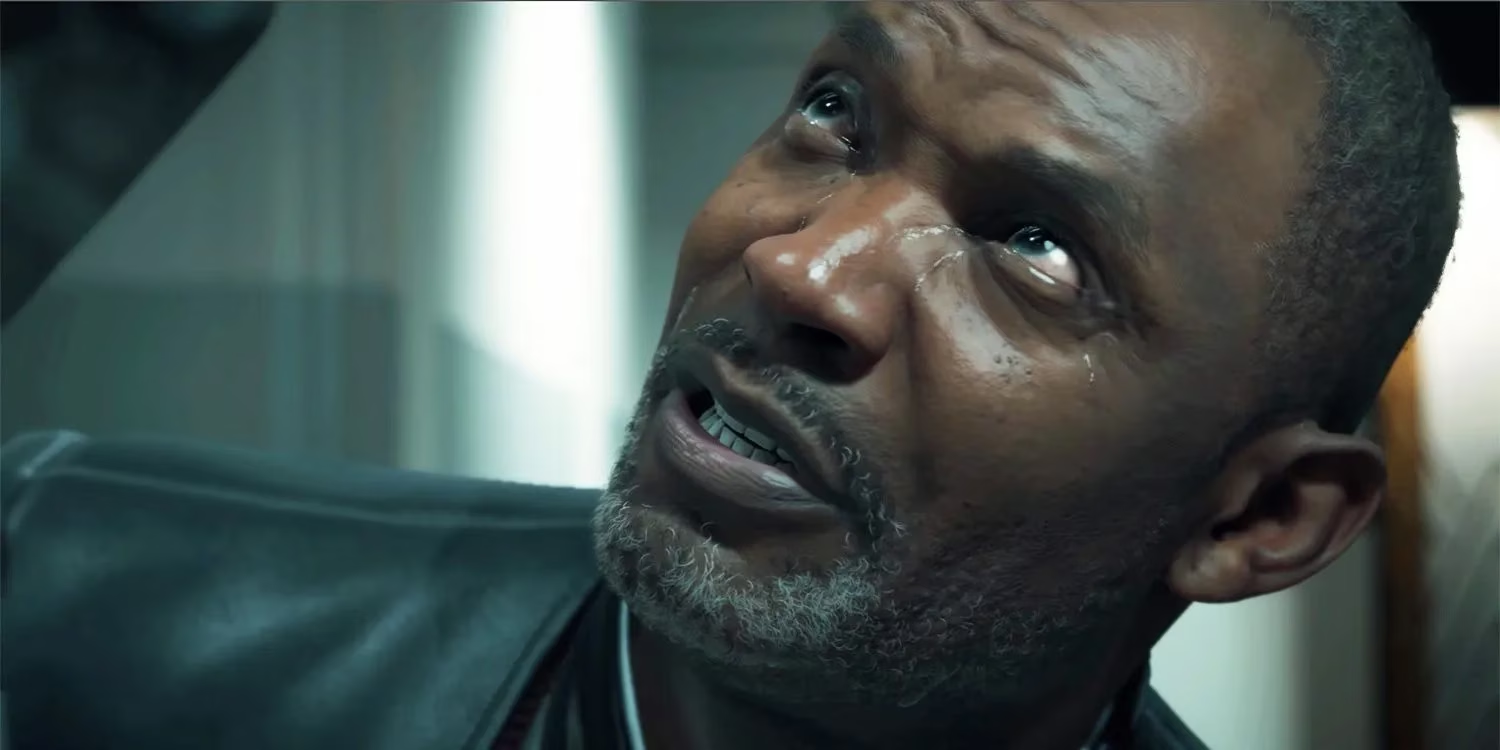
So, what are the potential narrative paths for Die-Hardman in 2026's sequel? Kojima is notorious for subverting expectations. Perhaps the stability of the United Cities of America is an illusion, and a new crisis forces the President to take a hands-on role once more. Maybe his leadership position makes him a target, intertwining his political fate with Sam's next journey. There's also the intriguing possibility that his connection to the Beach or his past actions with Bridget Strand could have unforeseen consequences, pulling him back into the heart of the conflict.
If the decision is to sideline him, the narrative justification must be ironclad. His absence needs to be felt, and the characters who step into his role—whether that's a new guide, a returning character like Heartman or Fragile, or even an older Sam mentoring a new protagonist—must be equally compelling. The void left by his steady guidance would be significant, and the game would need to ensure the player doesn't feel orphaned in the vast landscape.
Ultimately, Die-Hardman represents the fragile hope of the post-Stranding world. He is a leader forged from guilt, striving to build something better from the ashes. Whether he is directing operations from a presidential office or, against all odds, back on the front lines, his legacy is inextricably linked to Sam's story. As we await more news on Death Stranding 2, I remain hopeful that Kojima Productions finds a way to honor this complex character, ensuring that the man behind the mask continues to play a vital part in connecting our fractured world. The sequel has the potential to be a game-changer, and a thoughtful handling of its established cast will be key to its success.