The Twin Pillars of Kojima’s Future: Overdose and Death Stranding 2
Overdose, Kojima’s groundbreaking first-person horror game, leverages cloud technology for a haunting, immersive experience.
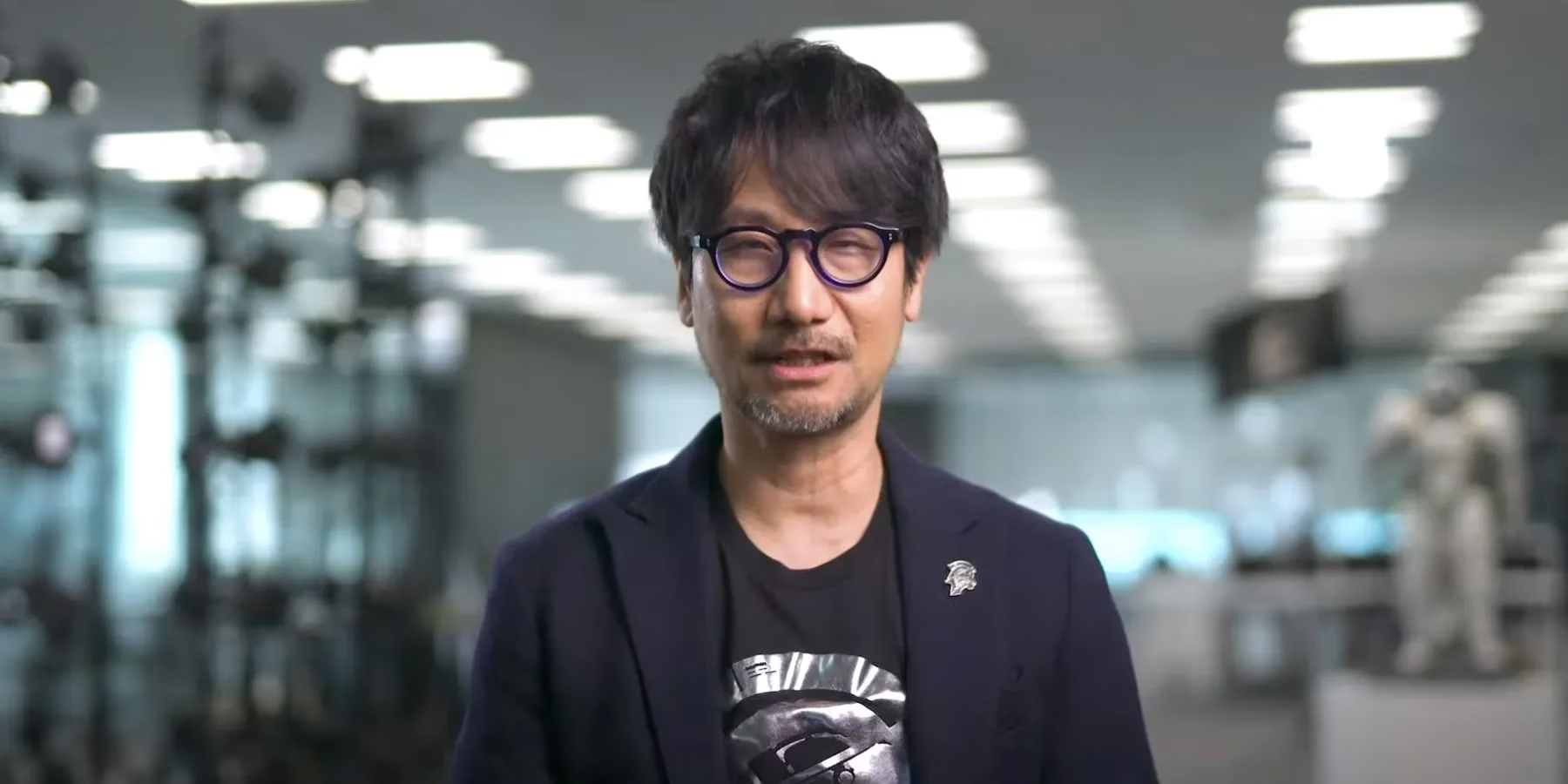
It’s 2026, and I still remember the electric hum of my monitor on that June afternoon when Hideo Kojima materialized at the Xbox Games Showcase for a mere forty-three seconds. The man didn’t need more. In that sliver of time, he placed a hand on an invisible chessboard and murmured about a game he’d “always wanted to make.” Four years later, that game has a name—Overdose—and I’ve just finished it for the third time, still feeling the residue of its dream logic clinging to my consciousness like morning fog that refuses to burn off. Back then, we were drowning in rumors: a horror project with Margaret Qualley, a game that would bend cloud technology into something unrecognizable, and a whispered return to the world of Death Stranding. Looking back, I realize those twin announcements weren’t just product reveals. They were the first heartbeats of a studio determined to reinvent what a sequel and a debut could mean.
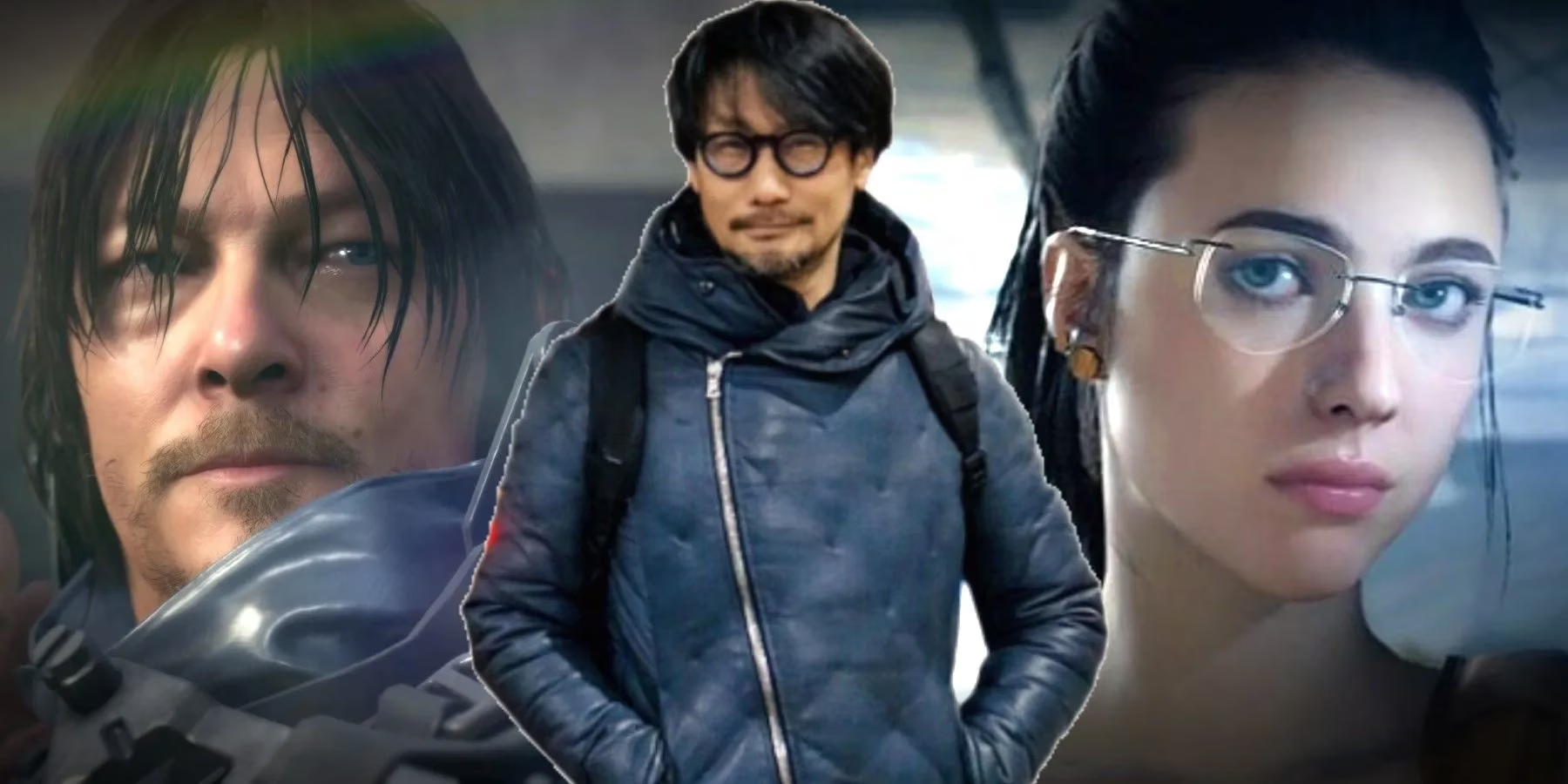
My first encounter with Overdose felt like opening a book written in a language I half-understood, each page smeared with night sweats. By 2024, the leaks had solidified into something breathtaking: a first-person horror experience that occasionally slithered into third-person, forcing me to watch my own body move like a marionette controlled by unseen hands. I played through swaths of it on a low-spec laptop, the game’s Microsoft cloud tech churning violence and tenderness somewhere off in a data center, delivering dread with minimal latency. The metaphor that still haunts me is that Overdose is a lucid nightmare stitched with a thread of longing—imagine being trapped inside a fever dream where every corner you turn reshapes the architecture of your own childhood home, and the only compass is the sound of someone you love sobbing in the next room. The story circled around addiction in ways that made my throat tighten, using Margaret Qualley’s face as a map of despair and resilience. She played a nurse moving through a hospital that phagocytosed memories, feeding on the regrets of patients until the walls began to breathe.
The mixed perspective was the rope I clung to. One moment I was her, vision narrowed by panic, and the next I was a floating observer, watching her stagger down corridors filmed with a cold, clinical eye. That shifting gaze—it wasn’t just a gimmick. It was Kojima dissecting empathy, asking me why I felt safer watching someone else suffer than inhabiting their skin. And because the game ran partially on Microsoft’s Azure, other players’ phantoms would bleed into my game like stains; I’d see a silhouette crumple in a corner, and I’d know someone, somewhere, had just lost their nerve at that exact spot. Overdose became a collective séance, a landmark release that proved a studio still coated in Konami’s ghost could craft something raw and unshackled. The reputation it earned—this messy, terrifying masterpiece—recast Kojima Productions not as the house that Metal Gear built, but as a forge of new genre alchemy.
And then there was Death Stranding 2, which landed six months after Overdose like a deliberate palate cleanser, except the palate it cleansed was reality itself. For years, the sequel was the Loch Ness Monster of the industry: photos of Norman Reedus in motion-capture gear would surface on Japanese Twitter, Sony would stay silent, and fans would build cathedrals of hope atop a single blurry asset. When it finally released in late 2025, I didn’t just play it—I weathered it. The game was a second expedition into a world where the strand genre had metastasized. The first Death Stranding taught me to connect isolated bunkers with ropes and ladders; the sequel taught me that connections can rot. Playing as an older Sam Porter Bridges, I carried not just packages but memories that had turned toxic, literal ghost-weight that slowed my steps until I learned to cut certain threads. The metaphor that stuck with me was that Death Stranding 2 is a performance of an orchestra where the musicians are scattered across a dead continent, and every melody you try to conduct is actually a request for trust—one wrong note and the whole piece dissolves into silence.
Norman Reedus’s performance felt excavated from a man who had lived inside that character’s bones for half a decade. Sam’s grunts became a language; his limping gait a story of exhaustion I recognized in my own reflection after long nights of playing. The game dared to ask: what happens when the bridges you built start to strangle you? I’ll never forget a sequence where I had to dismantle a massive zip-line network I’d constructed in the first game because it had become a tumor that attracted BT-like entities. Tearing down my own infrastructure while the ghost-echoes of other players who had used it flickered in and out felt like amputating a limb that had once held a loved one. It was a deliberate, punishing expansion of the strand idea, and it cemented the sequel as something more than a franchise entry—it was a thesis on the decay of community.
The fact that Sony bankrolled this sequel while Kojima was simultaneously in bed with Microsoft felt like watching a diplomat juggle two nuclear cores with a smirk. Early chatter suggested the first game hadn’t hit some arbitrary sales forecast, yet here was Death Stranding 2, gleaming with the kind of polish that only comes from a publisher willing to let an auteur scribble outside the margins. I think that dual partnership—the Xbox risk and the Sony continuity—is what turned the studio’s last few years into a high-wire act that paid off spectacularly. Both games wore the same artistic indecipherability like a coat of arms, but where Overdose was a shriek, Death Stranding 2 was a long, exhausted exhale.
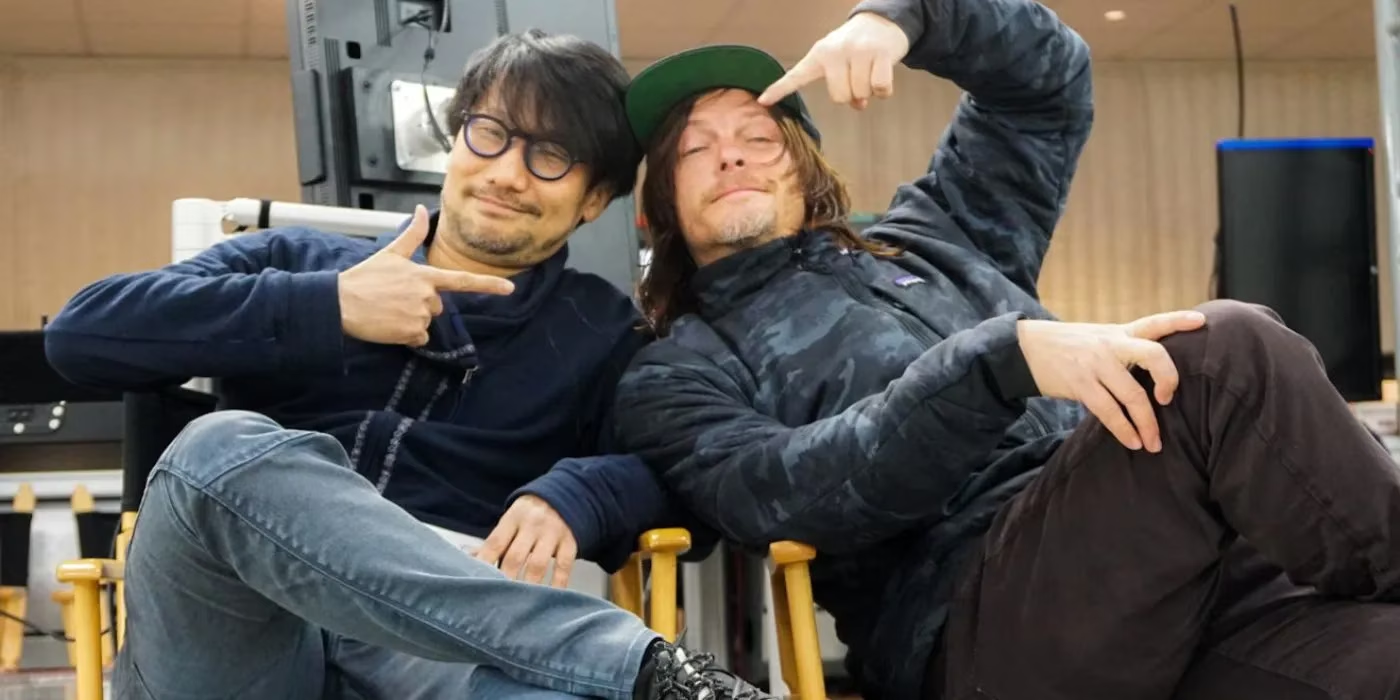
I think often about what Kojima said back in 2022—that this Xbox game was the one he’d always wanted to make. Listening to him now, in interviews after both releases, you can hear a man who has finally piloted his own vessel without a publisher’s hand on the rudder. Overdose was his midnight confession, the Silent Hills-shaped wound cauterized into a scar he’d transformed into art. Death Stranding 2 was the proof that his crazy, postal-apocalyptic parenthood simulator could bear a second child. Together, they’ve built a moat around Kojima Productions’ legacy, filled not with water but with a kind of creative piss-and-vinegar that makes me, as a player, hungry for whatever impossible thing comes next. The studio’s future is no longer a question mark; it’s an exclamation point carved from the very risks that were supposed to break it.