Still Chasing That Death Stranding Vibe in 2026? Meet Its Tonka Truck Cousin
Death Stranding 2 and Euro Truck Simulator 2 both offer hypnotic, meditative gameplay perfect for fans of tranquil, immersive journeys.
Remember the quiet, haunting stretches of Death Stranding—the ones where nothing happened except the scuff of Sam’s boots and the wind’s eerie howl? Kojima’s sequel, Death Stranding 2: On the Beach, dropped last year and smashed open the Chiral Network with even wilder boss fights and impossibly emotional cutscenes. But for many of us who’ve already platinum-ed it, a strange itch remains. The magic wasn’t in the punching of BT’s—it was in the long, hypnotic walks across a shattered America, balancing deliveries and losing yourself in pure, solitary traversal. Where do you go when you’ve reconnected every prepper in the UCA and still crave that meditative, cargo-hauling zen? Believe it or not, the answer has been hiding in plain sight since 2012: Euro Truck Simulator 2.
Sound absurd? On the surface, one is a prestige sci-fi epic starring Norman Reedus, and the other is a humble indie darling about obeying the speed limit through Gdansk. But after spending countless hours in both, I’ve come to realize they are spiritual twins—two deeply patient, almost anti-game games that wrap you in a bubble of soothing isolation, punctuated by the satisfying rhythm of pushing goods from A to B. If you enjoyed Sam Porter Bridges’ quieter moments, it’s time to climb into a Scania cab and discover why ETS2 remains one of the most compelling ways to decompress in 2026—no creepy BB pod required.
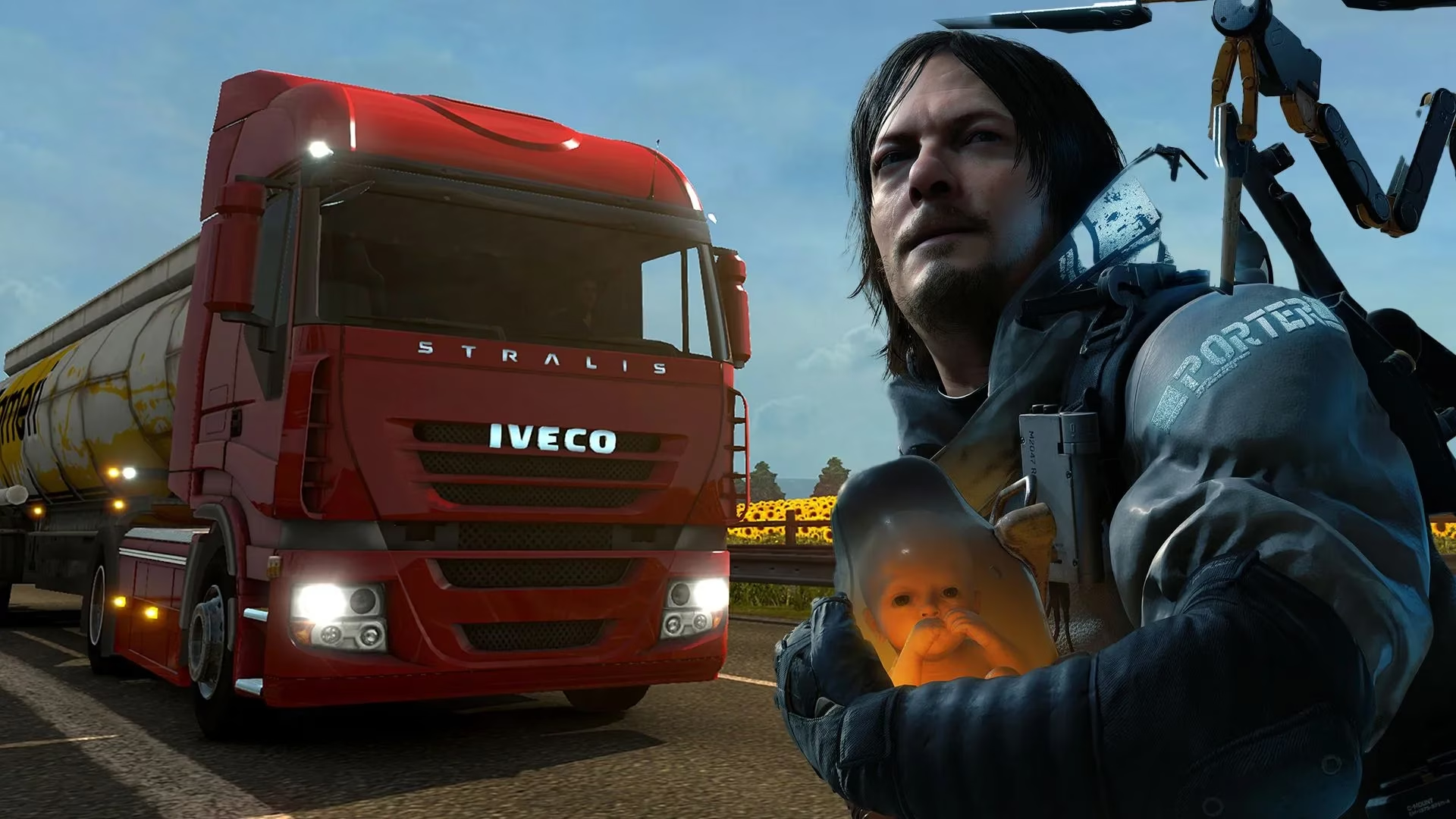
Let’s be real: the world of Death Stranding 2 is still a minefield of timefall ghosts and philosophical monologues. My favorite moments, however, were the ones where I could dodge all that drama entirely. I’d chart an absurdly indirect route just to spend twenty extra minutes picking my way down a mountain, wrestling with the physics of a teetering tower of packages, with nothing but the soundtrack and the mist for company. That’s the zone. When you forget the destination and melt into the process itself—muscle memory taking over, mind drifting freely—that’s where the true relaxation lies. Kojima built a masterpiece of melancholy movement, but its core is an algorithm of slow, purposeful connection. So, what’s a faster, less stressful way to scratch that exact itch in 2026? A diesel-powered rig and the open roads of Europe.
Euro Truck Simulator 2 doesn’t ask you to fight terrorists or flee from tar demons. Its greatest threats are a surprise traffic jam near Hamburg, a missed rest stop that leaves your driver yawning, or a reckless AI motorist cutting you off at a roundabout. You might think that sounds disappointingly mundane, but it’s precisely the banality that elevates it. When you’re cruising at night under a sky scattered with stars, raindrops drumming on the windshield, your only task is to stay between the white lines. Hit the highway, engage cruise control, and queue up a favorite podcast or playlist. The game transforms into a screensaver for your brain—a zen garden of bitumen and cargo manifests. Even in 2026, as rival sims chase hyper-realism with full physics engines and walking-around-your-truck features, ETS2’s simplicity remains its secret weapon. It’s a warm digital blanket.
SCS Software has been nurturing this game for over a decade, and the map today is astronomically vast. New DLCs have pushed the borders deep into the Iberian Peninsula, across the Balkans, and recently into the heart of the Russian steppes. You can haul furniture from Porto to Warsaw, deliver heavy machinery to reindeer farms in northern Finland, or get gloriously lost in the reworked Austrian Alps. The game world is static but staggeringly beautiful in a low-key, photo-realistic way, with faithfully rendered landmarks like the Rialto Bridge or wind farms dotting the Dutch coastline. Most of the drive, though, is gray asphalt and guardrails—and that’s exactly when the hypnotic state kicks in. It’s a meditation on motion. How many titles let you feel genuinely rested while your sole objective is to dock a 40-ton trailer flawlessly at a loading bay?
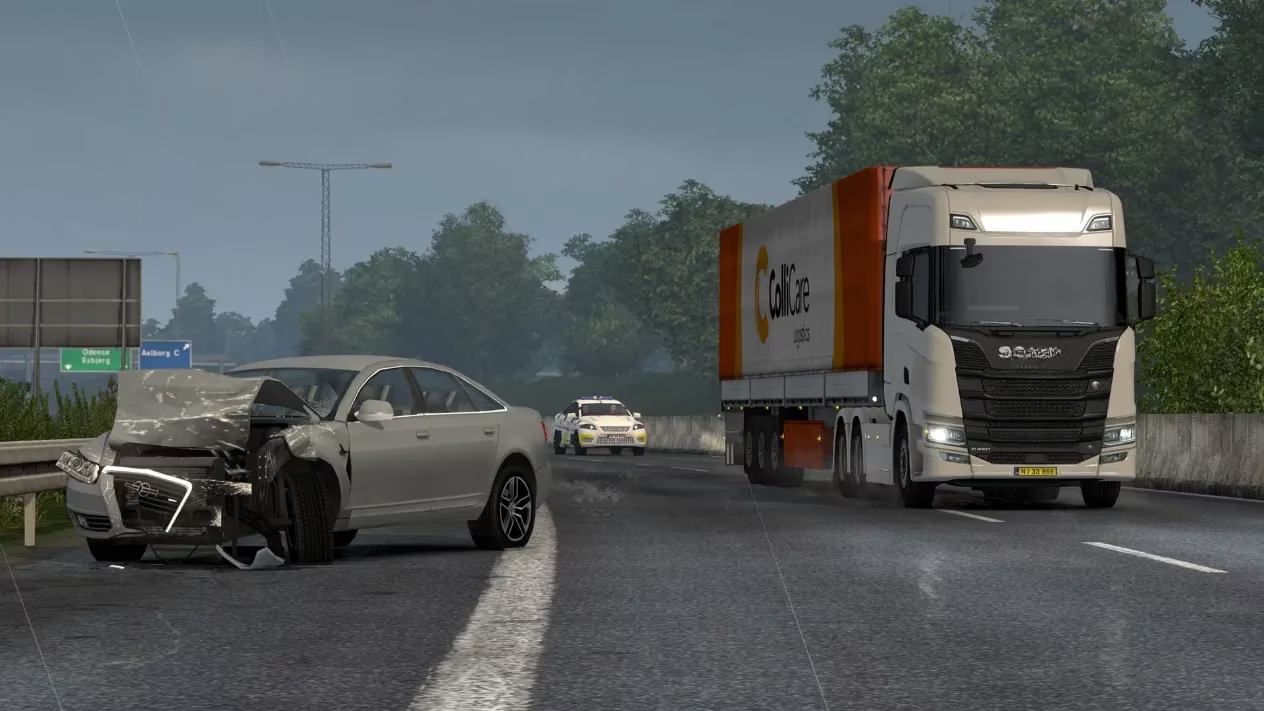
Both Sam and our anonymous ETS2 driver are, at heart, performing the same cultural heroism: connecting people through stuff. In Death Stranding, Sam strings isolated cities back onto a shared network, his deliveries becoming literal bridges for a fractured society. My trucker is the invisible backbone of a supply chain, making sure supermarket shelves stay stocked and economies keep ticking. There was even a real-world moment—the UK truck driver shortage a few years back—that reminded millions how fragile these logistical webs are. The difference is my ETS2 avatar won’t have to clamber up a cliff while a grotesque baby monitor cries about danger levels. The worst thing that can happen is a £400 fine for running a red light. And yet the emotional payoff feels remarkably similar: that quiet sense of a job well done, the quiet hum of the engine, the quiet of an empty road stretching toward a sunrise. Pure, uninterrupted quiet.
So, as 2026 rolls on and the gaming industry churns out ever noisier battle passes and metaverse worldlets, there’s profound comfort in a simulator that asks you to simply drive, deliver, and daydream. ETS2 isn’t a guilty pleasure—it’s one of the best open-world experiences ever coded, and I say that without a trace of irony. If you found yourself booting up Death Stranding 2 just to go for an aimless hike without any mission markers, you already understand. The journey is the destination. And in a world that sometimes feels just as fragmented as Kojima’s America, the gentle act of hauling a virtual load across a continent can feel almost therapeutic. So, the next time a friend asks what game could possibly match that unique, lonely magic of a Sam Porter trekk, direct them to a Czech trucking sim that’s been quietly crushing it for fourteen years. You’ll both wonder why you didn’t start sooner. Keep the cargo safe, drivers.