Postman Simulator 2.0: Will Death Stranding 2 Fix the Strand Genre’s Loneliness Epidemic?
Death Stranding strand genre review highlights Kojima Productions’ unique social gameplay and the sequel’s challenge to deepen connection.
A lone porter trudges across a mossy Icelandic hillside, his BB pod giggling as a glowing blue sign flickers to life – “Keep on keeping on!” – left by a stranger who hasn’t slept in three days. The year is 2026, and Kojima Productions’ Death Stranding sequel is finally upon us. But before we strap on our exoskeletons and deliver the world’s last remaining pizza, let’s look back at the original’s noble but slightly awkward attempt to pioneer the \u201cstrand\u201d genre. It’s a genre that whispered sweet nothings about connection, then handed you a ladder and said \u201cgo make friends with a rock.\u201d
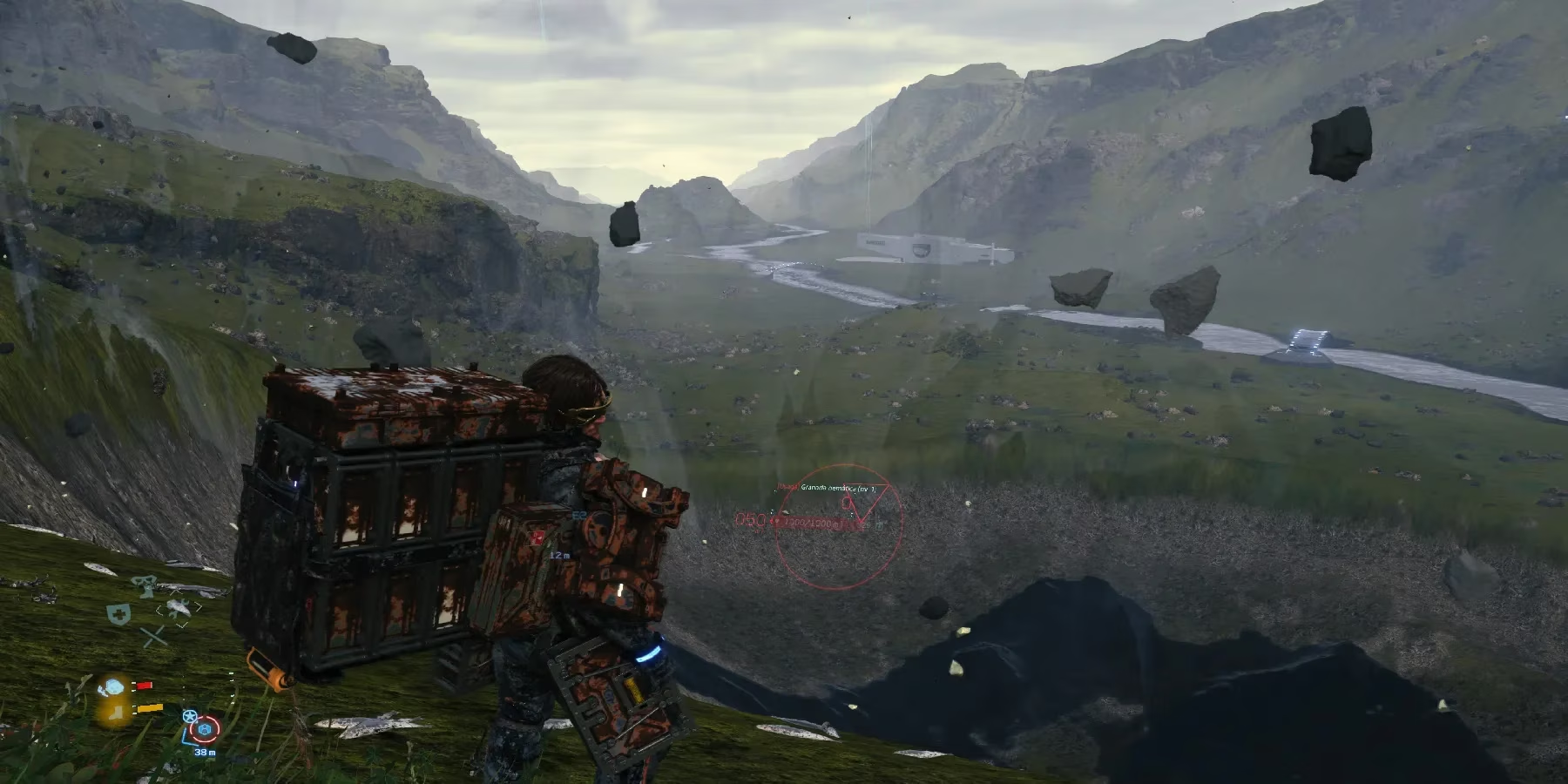
When Hideo Kojima first unveiled the strand concept, it sounded like a digital utopia: a game where progress came not from shooting things but from building a web of social goodwill. Leave a rope, earn a \u201cLike,\u201d and suddenly you’re not so alone in a shattered America. The problem? Dark Souls had been doing this passive multiplayer thing since before most of us knew what a Chiral Network was. Those cryptic \u201cTry finger, but hole\u201d messages were essentially strand gameplay with worse grammar. The original Death Stranding sometimes felt like it handed out the keys to a gentle, cooperative kingdom, only for half its citizens to speedrun the main story and ignore the communal mood board entirely. And let’s face it—when your reward for altruism is a slight uptick in a social credit score that buys you exactly nothing, even the most patient Sam Porter can’t help but mutter, \u201cWhy am I carrying this fish across a continent again?\u201d
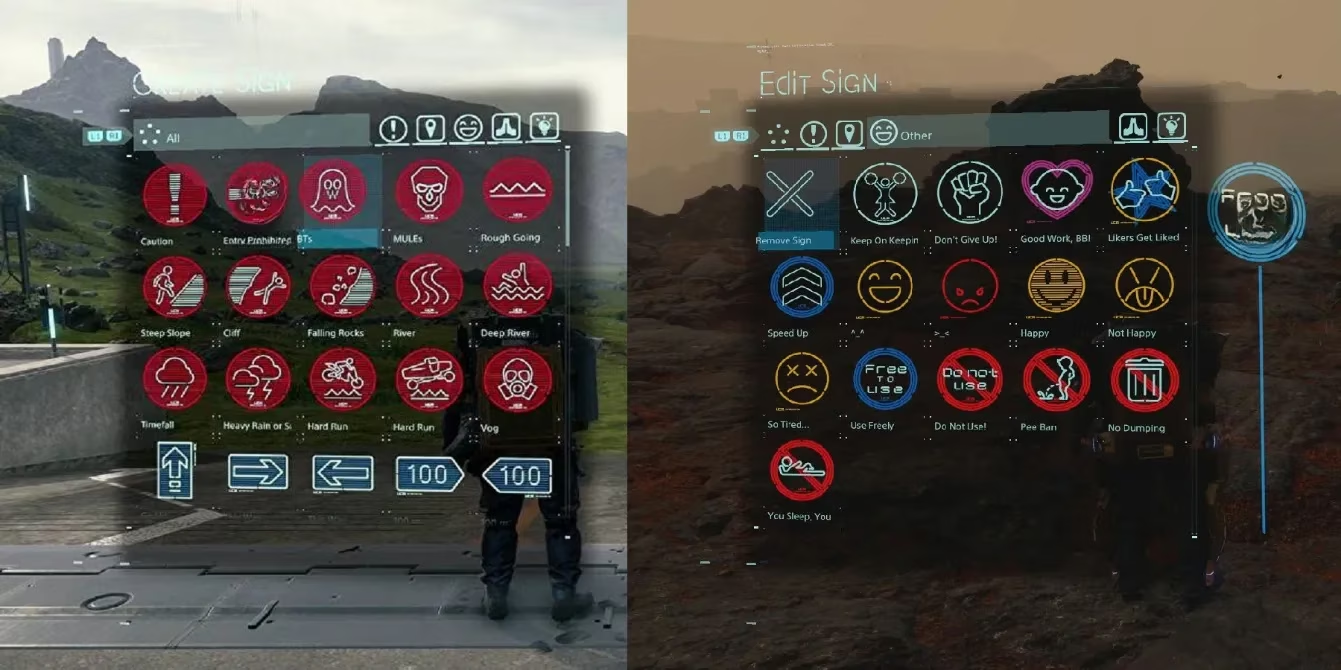
The signs… oh, the signs. The original game scattered motivational placards across its world like post-it notes on a depressed fridge. \u201cYou can do it!,\u201d \u201cWatch the BTs!,\u201d \u201cBeautiful view!\u201d – all helpful, yes, but also the digital equivalent of a thumbs-up emoji in a group chat you’ve muted. For the player who just wants to replay the Higgs boss fight and then log off, these socialist whispers are easily ignored. If a strand falls in a forest and nobody \u201cLikes\u201d it, does it even connect anything? The sequel needs to answer that with a capital YES, possibly by making those signs matter in a way that tangibly warps the world – or at least gives you a cute cosmetic hat.
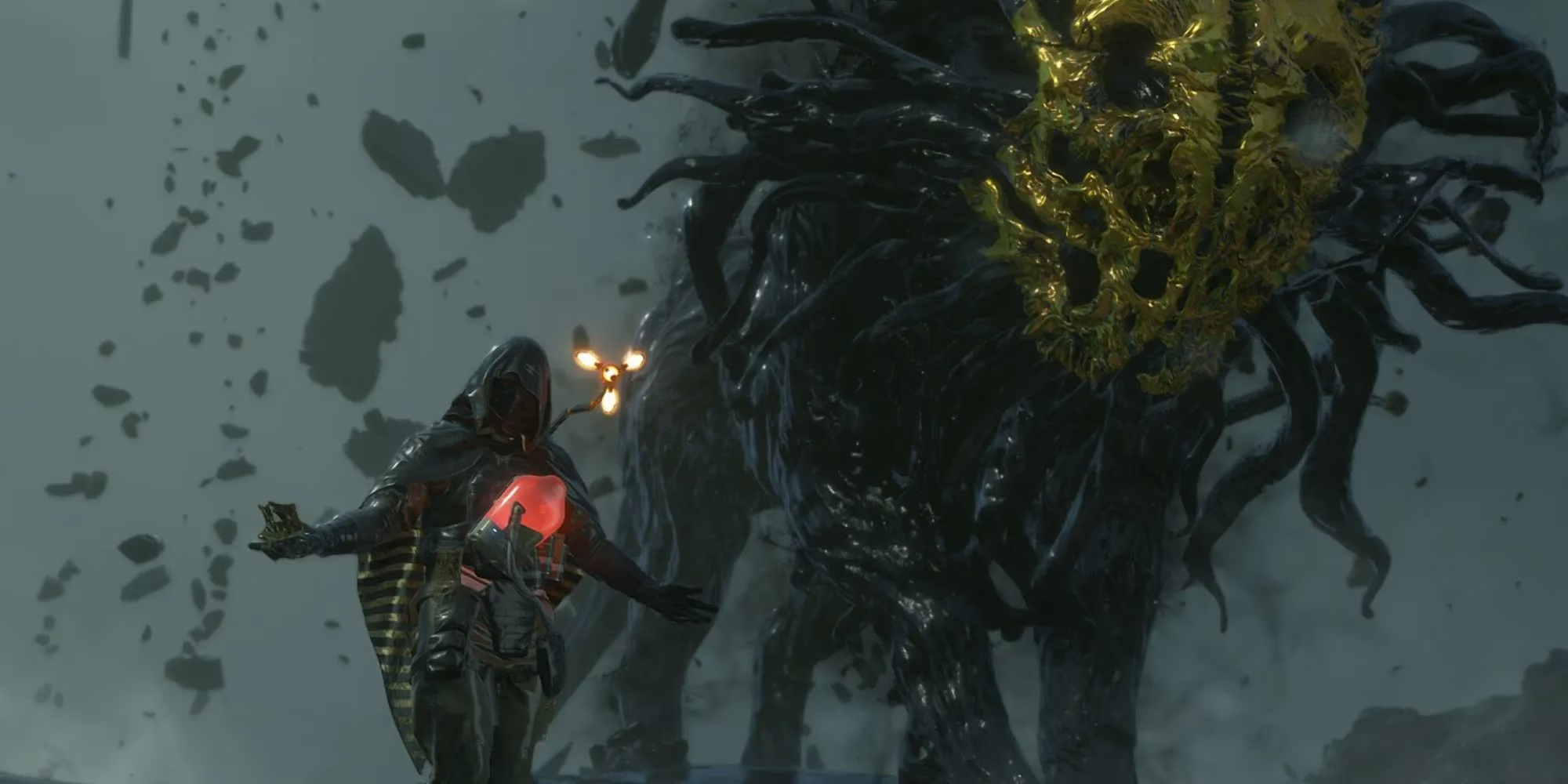
Then there\u2019s the Director’s Cut, which added all the subtlety of a Monster Energy drink to a tea ceremony. Here are some race tracks. Here\u2019s a jetpack. Here\u2019s a gun that turns BTs into confetti. While appreciated, these additions often felt like someone trying to fix a quiet poem by adding a dubstep drop. The sequel, presumably titled Death Stranding 2: Still Walking, has a tightrope to walk – it must preserve that unique meditative loneliness while letting players actually, you know, play together. Rumor has it the follow-up introduces real-time co-op deliveries where you and a buddy can double-balance a skyscraper-sized package while arguing about who forgot the rope. That\u2019s the kind of chaos we need: a strand genre where the multiplayer isn\u2019t just a ghost that leaves you a bridge, but a ghost that occasionally honks at you from a truck you didn\u2019t know existed.
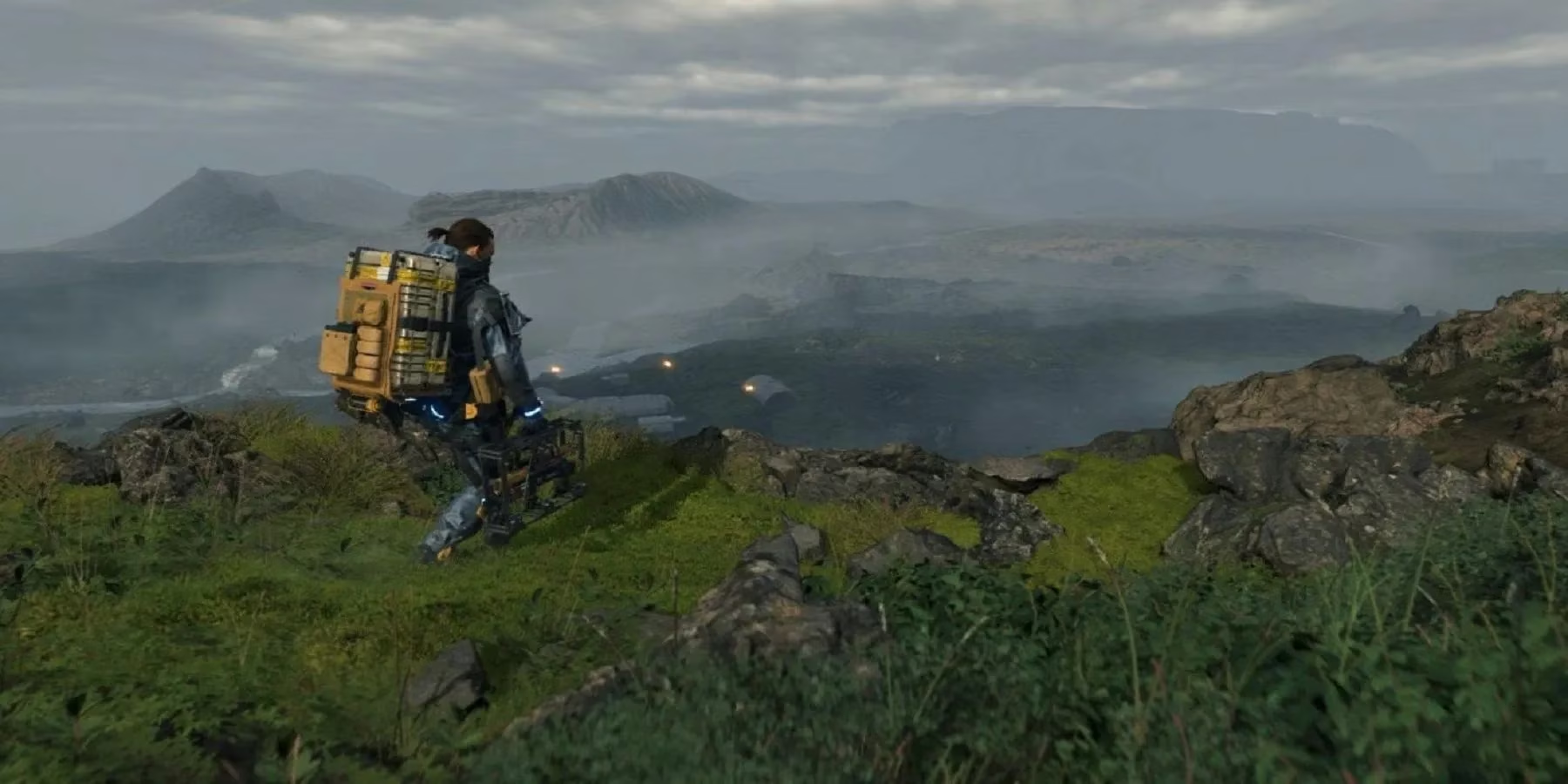
Let’s give credit where it’s due. Death Stranding dared to build a world where terrain was your true enemy and strangers were your secret allies. The sound of a timefall shelter materializing just ahead, built by someone who\u2019d never meet you, was a quiet kind of magic. But in 2026, the bar for social gameplay has been raised by indie darlings like Witch Strandings – a retro 2D caper that asks you to nurture a forest by delivering things and, crucially, makes supporting others feel like the whole point. Kojima Productions needs to bottle that feeling, inject it into their jaw-dropping photorealistic mountains, and serve it with a side of meaningful rewards. Maybe \u201cLikes\u201d unlock shared vehicle garages, or sustained collaboration literally reshapes the map for the whole server. Otherwise, we\u2019ll be leaving signs that say \u201cNice job!\u201d next to a cliff nobody ever needed to climb.
The strand genre still has the potential to turn gaming into a giant, messy, pat-on-the-back simulation where everyone wins when one person decides not to fall into a river. The sequel apparently includes a new social hub where porters can gather, exchange gear, and silently nod at each other like awkward penguins. That\u2019s a start. But honestly—and here\u2019s some real talk—we need the game to make us need each other. A world where ignoring the social side feels like leaving a potluck empty-handed. If Kojima can thread that needle, Death Stranding 2 won\u2019t just be a sequel; it\u2019ll be the warm hug the strand genre promised five years ago.
Death Stranding 2 (tentative title) is expected to release in late 2026 for PS5 and PC. Keep on keeping on.