Navigating the Strand: My Journey Through Death Stranding's Dense Lore and What It Means for the Sequel
Death Stranding 2 and Hideo Kojima promise an enigmatic, mind-bending sequel, blending mystery, emotion, and groundbreaking storytelling.
As I sit here, fingers hovering over the controller, the year 2026 feels both distant and intimately close. The echoes of the first Death Stranding still resonate within me—its haunting landscapes, its whispering ghosts, its profound loneliness that somehow connected us all. And now, the promise of a sequel looms on the horizon, a puzzle wrapped in a mystery, delivered by Hideo Kojima himself. I remember when that first teaser for Death Stranding 2 dropped late last year; it was like trying to decipher a dream. Fragments of the past, glimpses of a future, and that ever-present sense of something just beyond understanding. To be honest, it left me with more questions than answers, and I have a sneaking suspicion that's exactly where Kojima wants us.
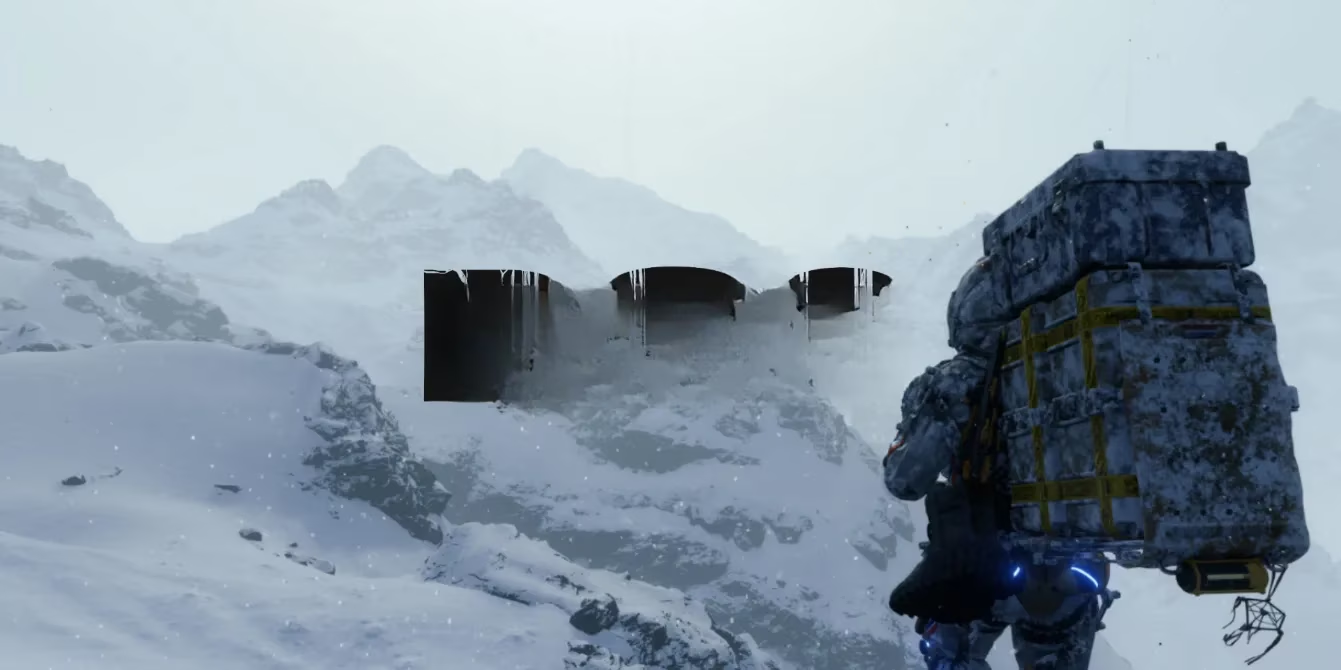
The Auteur's Enigma: Kojima's Narrative Maze
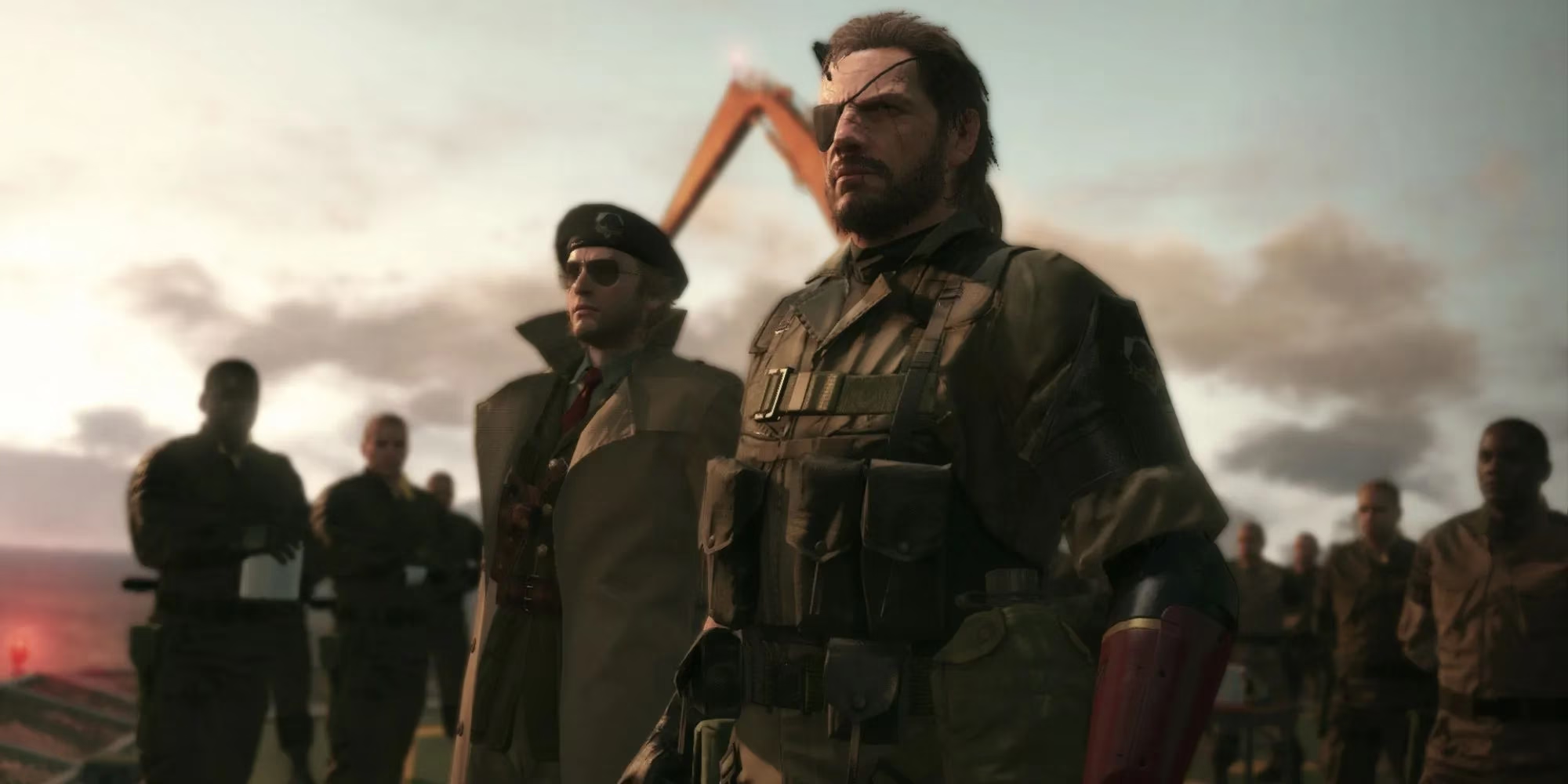
Let's talk about Hideo Kojima for a moment. The man isn't just a game director; he's a storyteller who paints with the brush of the bizarre. His worlds are living, breathing things that sometimes feel like they're predicting our own future. I've walked through his previous creations, the Metal Gear Solid series, and each step was a lesson in layered comprehension. You think you understand the surface—the sneaking, the political intrigue—but then he pulls back the curtain, and you realize you've only been wading in the shallow end. Fully grasping Metal Gear Solid V: The Phantom Pain wasn't just about that game; it was an archaeological dig through two decades of lore. And, well, if we're being real here, I think Death Stranding 2 is gonna be the same kind of beast.
The First Strand: Unraveling a World of Ghosts and Babies
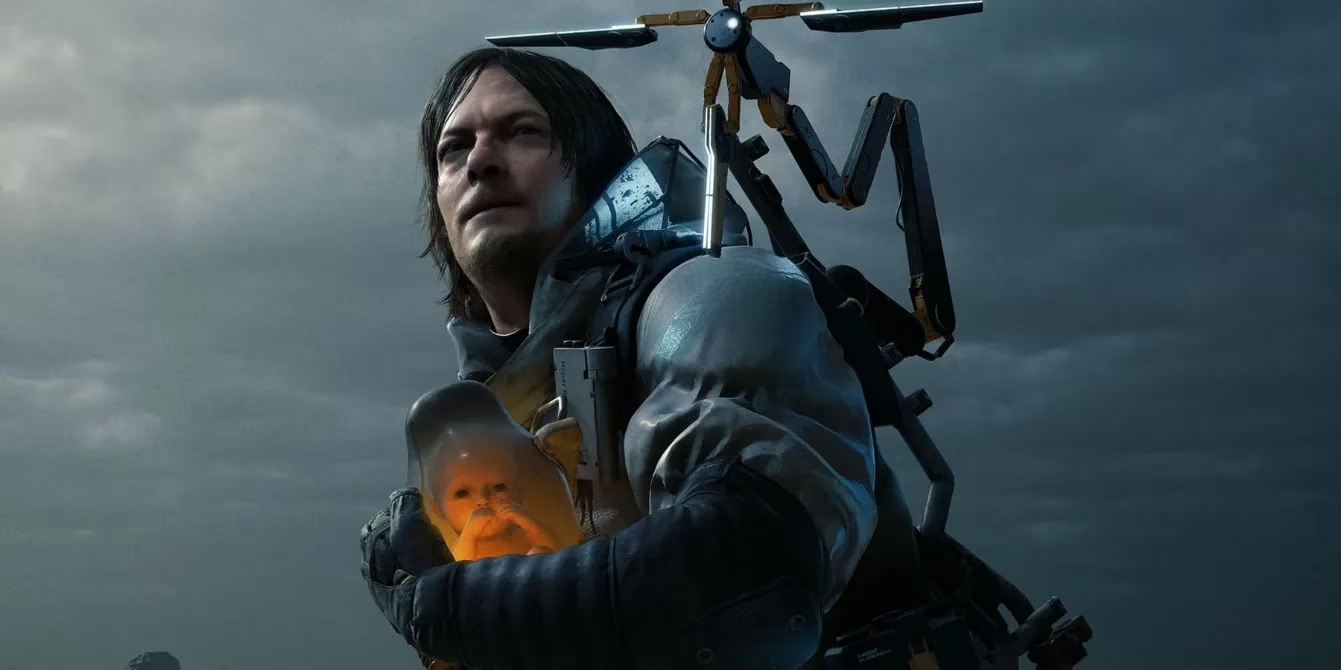
Oh, the first game. What a trip that was. It arrived, this strange, beautiful, and frankly kinda clunky package, and it dared us to make sense of it. On the surface, Sam Porter Bridges delivering packages to reconnect a shattered America. Simple, right? Yeah, not so much. Beneath that was a universe teeming with:
-
Beached Things (BTs): These invisible, oily ghosts that dragged you to a boss fight if you breathed wrong.
-
Bridge Babies (BBs): Infants in pods, connecting the living to the world of the dead. Still gives me chills.
-
The Death Stranding: The apocalyptic event itself, a cosmic reset button that blurred life and death.
-
Timefall: Rain that rapidly ages anything it touches. Poetic and terrifying.
The narrative was a masterpiece of the eighth console generation, but boy, could it be dense. Critical lore was tucked away in optional emails and codec calls you could easily miss while trying not to trip over a rock. It was a world that demanded your full attention, where the "show, don't tell" rule sometimes took a backseat to pure, unadulterated "tell." You had to piece it together yourself, and even then, some concepts—like the chiral network or the existential threat of extinction—could just... fly right over your head. You had to sit with it, let it marinate.
The Bridge to Tomorrow: Why the Past is Key to the Future
And that's the crux of it, isn't it? The biggest battle we'll face with Death Stranding 2 won't just be against new BTs or navigating tougher terrain. The real fight will be inside our own heads, wrestling with the legacy of the first game. The teaser trailer is a perfect metaphor—scenes that feel like memories, characters transformed, a narrative thread that seems to weave through time itself. Is it the past? Is it the future? Is it both? Theories of time travel aren't just fan speculation; they feel like a natural extension of Kojima's mind-bending style.
To understand where we're going, we must remember where we've been. The sequel will undoubtedly build upon that already-bizarre foundation. Imagine trying to explain the significance of Fragile's aging, Higgs's madness, or Amelie's beach to someone who never played the first game. It'd be like trying to describe a symphony by humming one note. The first game's lore isn't just backstory; it's the DNA of the entire experience.
My Preparedness Checklist for the Sequel
So, as I wait for more news, I'm not just waiting passively. I'm preparing. I'm rebuilding my mental bridges. Here’s my personal checklist:
| Area to Revisit | Why It's Crucial | My Personal Notes |
|---|---|---|
| The Nature of Beaches | The connective afterlife realm. | Each person's private beach, Amelie's central role. Key to understanding space-time? |
| The DOOMS Factor | Why some people can sense BTs. | Sam's level, Fragile's, Higgs's. A spectrum of connection to the other side. |
| The chiral network & repatriation | The game's core tech and Sam's "gift." | It's not just internet; it's a soul-based reconstruction system. Mind-blowing. |
| Cliff Unger & BB-28 | The emotional heart and a huge mystery. | That final reveal... was our BB Lou his son all along? This has to continue. |
It's a lot to hold in your head. But that's the magic and the madness of a Kojima production. The clarity on Death Stranding 2 right now is about as clear as a Timefall storm—which is to say, not very. But I know this: understanding this new world will be a journey of reconnection. I'll need to retrace my steps through the first game's emotional and narrative landscape, listening closely to the echoes I missed the first time.
The strand that connects us isn't just in the game; it's the shared experience of unraveling its secrets. As development continues in silence, I find myself going back, replaying key moments, reading those forgotten interviews, and letting the strange, beautiful weight of that world settle over me once more. The sequel is coming. And to walk its path, I must first remember the feel of the stones beneath my feet from the journey before. Half the battle is already behind us, etched in memory and chiral crystals. The other half awaits, on a beach we haven't seen yet.