Kojima's Creative Gamble: How Elle Fanning Became Essential to Death Stranding 2's Story
Death Stranding 2 and Elle Fanning shine in Hideo Kojima's bold, collaborative storytelling, blending creativity with risk for a unique gaming legacy.
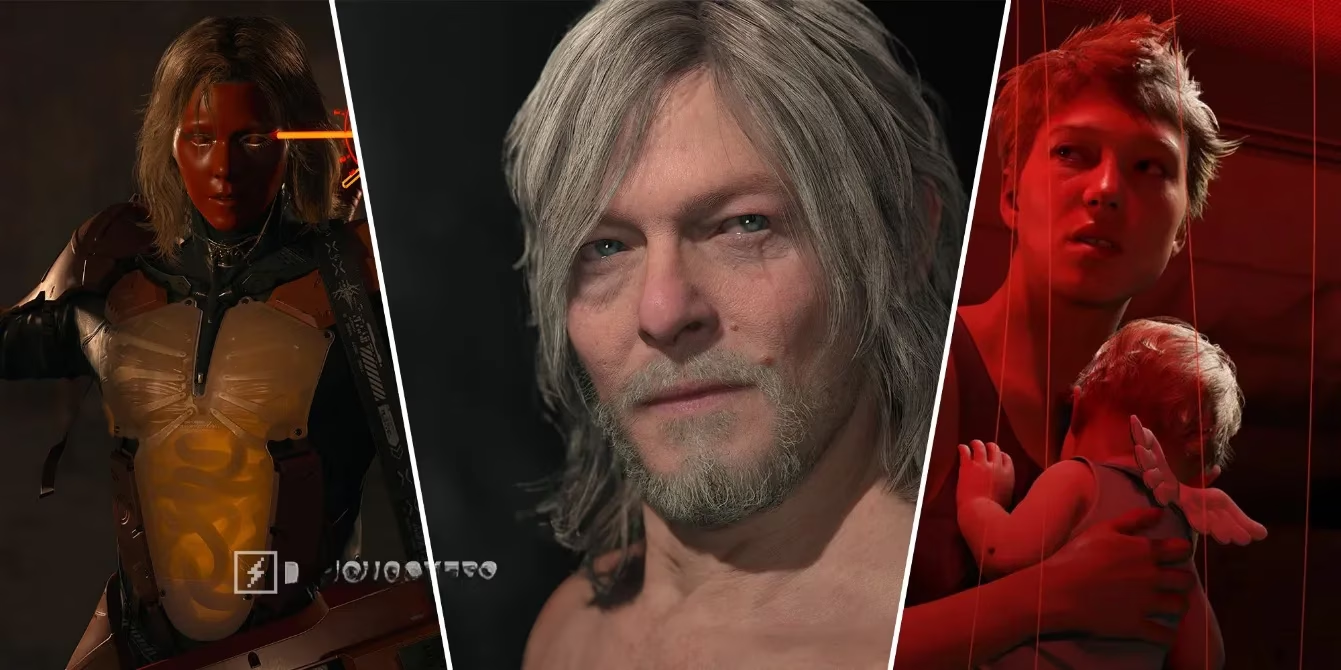
As I sit here in 2026, reflecting on the journey of Death Stranding 2, I can't help but marvel at the creative tightrope walk its director, Hideo Kojima, performed years ago. The story of how this game came to be is almost as fascinating as the game itself. Imagine this: a visionary creator writes a pivotal character, pouring his narrative heart into it, but with one specific person in mind. What if that person said no? According to Kojima himself on his Brain Structure podcast back in the day, the answer was stark—he would have had to "throw out the scenes." The entire character, so integral to the plot, was crafted specifically for actress Elle Fanning before she was even approached. Isn't that a tremendous risk? To build a cornerstone of your story around the hope that one artist will say yes? Yet, for Kojima, there was no other way. "I really can’t share much, but she’s a very, very important character," he explained. "And yes, I created the character with Elle in mind. So I was worried about her saying no to the offer." The anxiety was palpable; this wasn't just casting, it was a foundational creative decision.
The Genesis of a Role Written for One
This approach reveals so much about Kojima's process. He doesn't just see actors as vessels for pre-written lines; he sees them as muses and collaborators from the very inception of an idea. Before the game's official reveal at The Game Awards 2022, Kojima had already teased working with Fanning and Shioli Kutsuna on a new project. The official trailer, however, played its cards close to the chest. While it confirmed the return of Norman Reedus as Sam Porter Bridges and Léa Seydoux as Fragile, Fanning's role remained a mystery, hinted at only by a masked blonde figure. The secrecy only fueled our imaginations. What kind of character demanded such specific tailoring?
A Collaborative Evolution
What happened after Fanning accepted the offer is perhaps even more telling. Kojima didn't just hand her a finished script. Their meeting became a creative session. "I changed a lot, I even added in new scenes," Kojima admitted. He praised her not only as talented and charming but as someone whose input he actively sought. This desire for collaborative creativity is a hallmark of his work. He spoke about wanting talents like Fanning to have a voice in shaping their characters. So, the role written for her began to evolve with her. This iterative, actor-driven development is rare in big-budget games and speaks to a deeply cinematic and respectful approach to storytelling.
The Platform Puzzle and Legacy
Of course, part of the story back then was the platform question. Initially announced as a PlayStation 5 exclusive, there was much speculation about a PC release, mirroring the path of the first game. Fans were left wondering, waiting for that eventual confirmation. Fast forward to today, in 2026, and we see how that all played out. The game's journey from a risky, actor-specific concept to the multi-platform experience we can all enjoy now is a testament to its enduring vision.
Looking back, Kojima's gamble on Elle Fanning was about more than just star power. It was a statement about the fusion of performer and role, where the essence of the actor breathes life into the DNA of the character. He didn't just want an actress; he wanted Elle Fanning, and he was willing to rebuild his story to get her. In an industry often driven by rigid planning, that's a powerful lesson in following a creative instinct, no matter how perilous it seems. The success of Death Stranding 2 stands as proof that sometimes, the biggest risks yield the most unforgettable connections.