How Death Stranding 2 Could Revolutionize Climbing in Video Games
Death Stranding 2 and climbing mechanics promise to revolutionize gameplay, turning mundane ascent into a thrilling, strategic core experience.
In the world of video game design, certain mechanics have become as commonplace as the air we breathe, yet they often remain as creatively stagnant as a forgotten puddle after a rainstorm. Climbing, a feature present in countless titles from sprawling open-world adventures to intimate indie explorations, frequently falls into this category. It's a functional tool, a means to an end, but rarely the source of genuine engagement or joy. As we look ahead to the highly anticipated Death Stranding 2 in 2026, there's a compelling case to be made that Hideo Kojima's visionary sequel is uniquely positioned to transform this mundane activity into a cornerstone of compelling gameplay, much as its predecessor redefined the simple act of walking.
The Legacy of a Journey: From Walking to Ascending
The original Death Stranding was a masterclass in finding profound depth in a fundamental human action: walking. It wasn't a walking simulator in the traditional sense; it was a physics-based logistics nightmare turned into meditative gameplay. Players, as Sam Bridges, weren't just moving from point A to B. They were managing precarious towers of cargo, carefully plotting routes across treacherous terrain, and constantly battling gravity, balance, and fatigue. This system transformed a basic verb into a tense, strategic, and surprisingly emotional core loop.
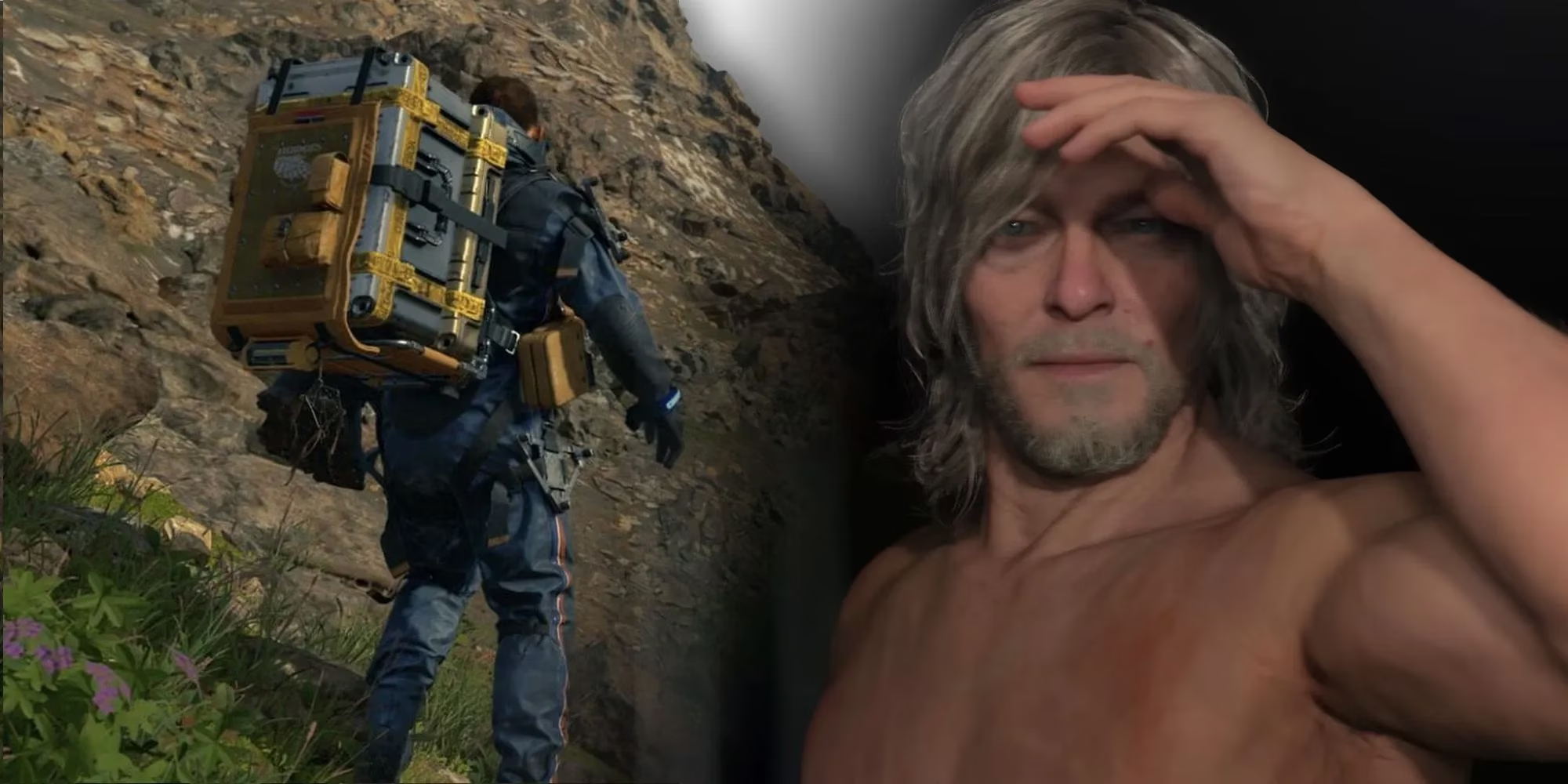
This philosophy of meticulous, systems-driven interaction is the perfect blueprint for a climbing revolution. Where most games treat climbing like a simple elevator ride—hold a button and go up—Death Stranding 2 could approach it as a complex puzzle of physics and planning. Imagine Sam, not just effortlessly scaling a cliff, but actively searching for handholds, testing the integrity of rock faces, and dynamically shifting his weight and cargo distribution to prevent a catastrophic tumble. The game's focus on tactile feedback and consequence could make every meter gained feel like a hard-won victory.
Why Current Climbing Mechanics Have Hit a Wall
To understand the potential, we must first diagnose the problem. In many modern games, climbing has become a choreographed animation sequence rather than a skill-based challenge.
-
The Assassin's Creed Problem: For years, this franchise made parkour and climbing its signature, but it did so by removing almost all friction. Characters scale sheer historical edifices with the effortless grace of a spider, requiring little more from the player than holding a direction. It's visually impressive but mechanically shallow, turning iconic landmarks into mere checklist objectives.
-
The Stamina Bar Band-Aid: Other games, like the otherwise brilliant The Legend of Zelda: Breath of the Wild, introduce a stamina meter to create tension. While a step in the right direction, it often reduces climbing to a resource-management mini-game. The act itself—finding where to climb—remains passive. Rain becomes an arbitrary \u201cyou shall not pass\u201d gate rather than an interesting environmental variable that changes your approach.
These systems treat the player's avatar like a magnet on a metal wall. Death Stranding 2 has the opportunity to make Sam feel human again—vulnerable, deliberate, and bound by the unforgiving laws of physics.
The Pillars of a Potential DS2 Climbing System
So, what would a Death Stranding 2 climbing system actually look like? Based on the foundation of the first game, we can extrapolate several key pillars that would make it revolutionary.
-
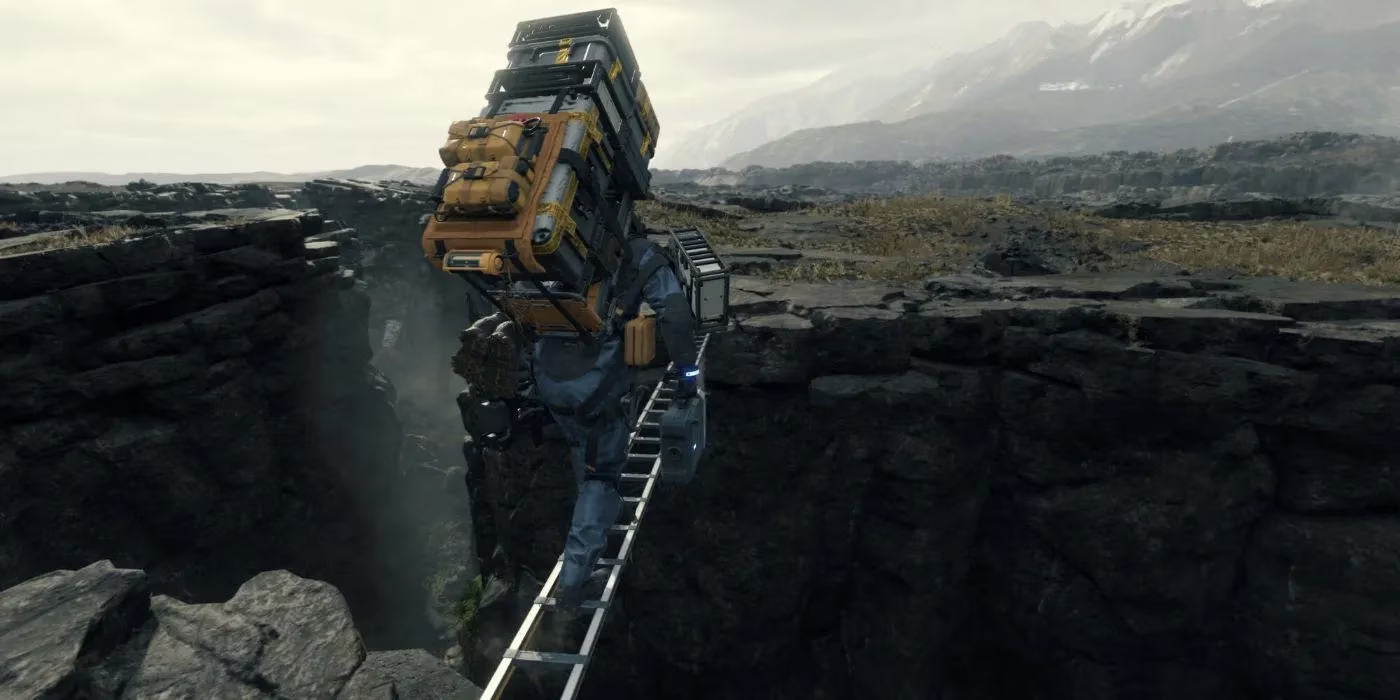
Dynamic Weight and Balance: This is the heart of it. Your cargo isn't just a stat; it's a physical entity on Sam's back. A lopsided load would pull him dangerously to one side during a climb. Choosing what to bring on a vertical expedition would be as crucial as planning the route itself. Do you bring extra climbing anchors for safety, or travel light to be more agile? Every piece of gear would have a tangible impact on your center of gravity, turning inventory management into real-time climbing strategy.
-
Environmental Interaction and Risk: Cliffs shouldn't be uniform textures. They should have cracks, ledges, loose rocks, and slippery moss. Death Stranding 2 could require players to scan rock faces for viable paths, test handholds before committing their full weight, and use tools like pitons or climbing anchors to create temporary secure points. A missed swing or a crumbling ledge wouldn't just mean falling a few feet and losing some health; it could mean watching your precious, painstakingly delivered cargo plummet to the valley floor below, shattered into useless fragments. The stakes would be visceral.
-
Tool Integration and Progression: The first game gave us ladders and climbing anchors for steep slopes. The sequel could expand this arsenal dramatically.
| Tool | Potential Function |
|---|---|
| Advanced Climbing Anchors | Create temporary safe zones or pulley points for hauling cargo up separately. |
| Portable Winch/Zipline | Set up tension lines between established anchors for traversing gaps or hauling gear. |
| Geological Scanner | Analyze rock density and stability to plot the safest path upward. |
| Adaptive Gloves/Boots | Equipment that deteriorates with use, providing better grip on specific surfaces (ice, rock, metal) but needing maintenance. |
This turns climbing from a static action into a dynamic gameplay loop of Scan -> Plan -> Equip -> Execute -> Adapt.
The Payoff: More Than Just a View
Revolutionizing climbing isn't just about making it harder; it's about making it more meaningful. In Death Stranding, reaching a distant distribution center after a grueling trek was cathartic because the journey itself was the challenge. Similarly, in Death Stranding 2, cresting a formidable peak after a meticulous, white-knuckle ascent should feel like a monumental achievement. The vista at the top isn't just a scenic reward for holding \u2018X\u2019; it's the proof of your mastery over a complex, engaging system. It would transform mountains from mere background scenery or inconvenient walls into the ultimate gameplay destinations, each one a boss fight against gravity and your own preparation.
Kojima Productions has always excelled at blending high-concept narrative with novel gameplay systems. A deep climbing mechanic would be a natural extension of the series' core themes of connection, perseverance, and navigating a broken world. It would be a system as intricate and rewarding as the chiral network itself, a delicate web of player choice and physical consequence. While the 2026 release of Death Stranding 2 remains shrouded in the typical Kojima mystery, the potential for it to scale new heights—both literally and figuratively—by reinventing one of gaming's oldest mechanics is an exhilarating prospect. In a landscape where climbing has become as routine as a morning commute, Death Stranding 2 could make us feel the thrilling, terrifying, and sublime act of ascent for the very first time, turning every cliff face into a story waiting to be conquered.