How Death Stranding 2 Can Transform MULE Camps & Combat in 2026
Explore how Death Stranding 2 can revolutionize its combat system and MULE camps, transforming them from repetitive nuisances into compelling, narrative-driven threats.
Alright, gather 'round, fellow porters and Kojima enthusiasts! As we look ahead to 2026, the whispers and hopes for Death Stranding 2 are growing louder. The first game, that beautiful, weird, and sometimes divisive baby of Hideo Kojima, left us with a world of breathtaking traversal and... well, let's just say combat that often felt like an afterthought. It was a game you either vibed with completely or found yourself asking, "Wait, that's it?" when it came to throwing punches (or grenades). Now, with the sequel on the horizon for the PS5, there's a golden opportunity to address one of the most talked-about aspects: the MULE camps and the combat system. This isn't about turning Death Stranding into a full-blown shooter, but about giving its unique world the depth it deserves.
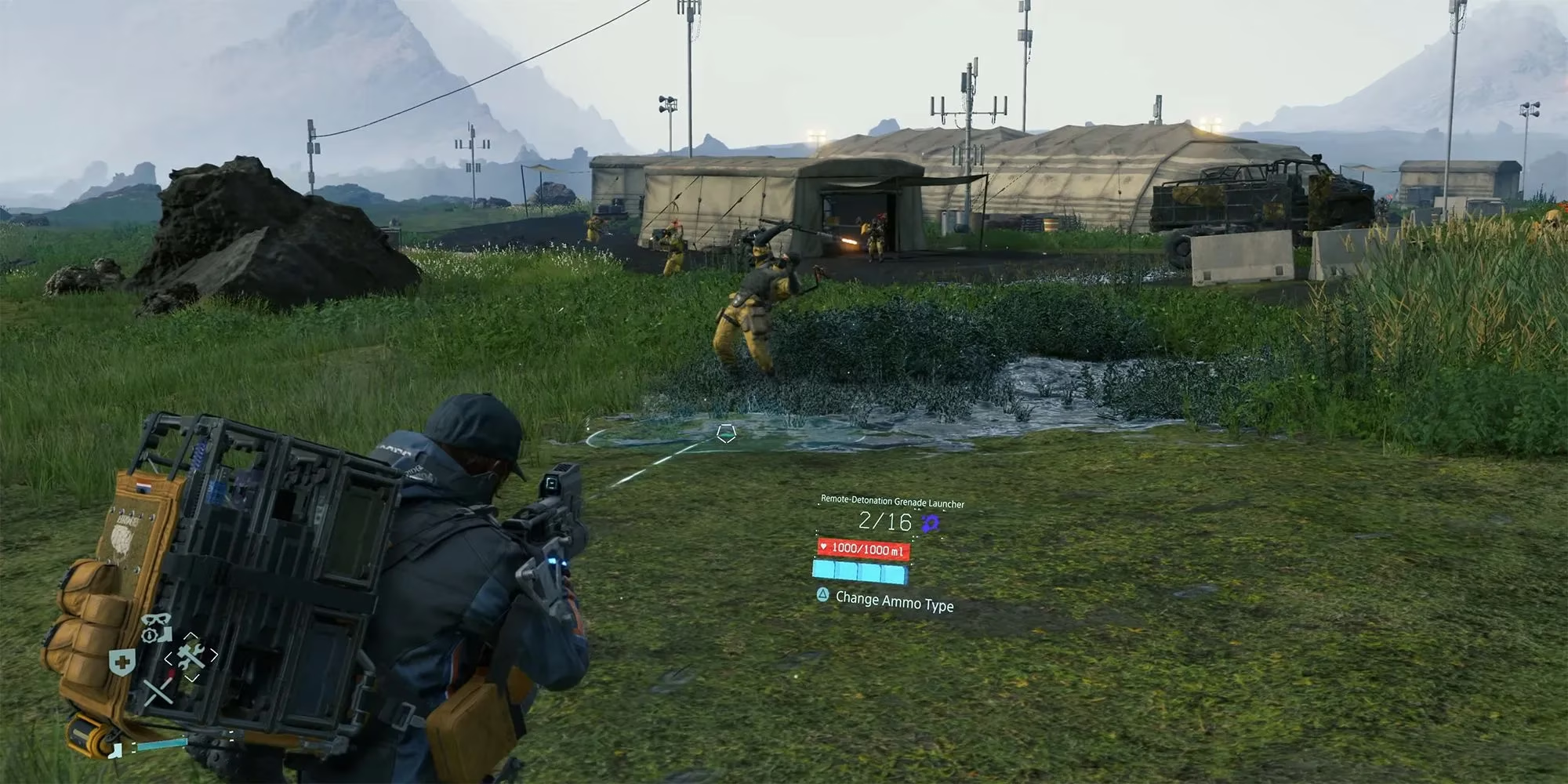
The MULE Conundrum: Nuisance or Narrative Goldmine?
In the fractured world of the United Cities of America, cargo is life. And where there's valuable cargo, there are folks who want to take it—enter the MULEs. These bandits, obsessed with stealing packages, were a constant, low-grade threat in Sam Bridges's journey. From a lore perspective, they make perfect sense. But in execution? They often felt like speed bumps on the long, lonely highway. You'd encounter a camp, and your options were pretty binary:
-
Stealth Mode: Sneak around like a ghost, trying not to trigger their cargo-sensing radar. 🥷
-
Loud & Proud: Whip out the non-lethal weaponry and clear the camp in a straightforward skirmish.
The payoff was usually just recovering some stolen player cargo. Useful, sure, but after the tenth camp, it started to feel... repetitive. The potential was there, but it was barely tapped. They were more of a mild annoyance than a compelling part of the world's ecosystem. It's like they were screaming for more screen time, but the game just kept them in the background.
Learning from the Masters: A "Yiga Clan" Inspiration
Here's where Death Stranding 2 could seriously level up. Imagine if the MULEs evolved from scattered bandit camps into a more organized, menacing faction. A fantastic blueprint exists in The Legend of Zelda: Breath of the Wild with the Yiga Clan. They weren't the main villain, but they had their own hideout, their own storyline thread, and they felt like a persistent, growing threat woven into the world.
Death Stranding 2 could do something spectacular by introducing a massive MULE headquarters. Think about it:
-
A multi-stage, mini-dungeon experience that's part of the main quest.
-
Environmental storytelling showing how the MULEs have grown in number and tech since the first game.
-
Unique objectives beyond "knock everyone out"—maybe sabotaging their network, rescuing captured porters, or uncovering a darker secret about their origins.
This wouldn't just be "more combat"; it would be meaningful combat that expands the lore and makes the world feel more alive and interconnected. It would give those orange-clad fanatics the narrative weight they always deserved.
Combat Evolution: More Tools, More Strategy, More Fun
Let's be real, the first game's combat was... functional. It got the job done, but it wasn't why we played. For the sequel to truly integrate enhanced MULE threats, the combat mechanics need some love too. This isn't about turning Sam into Doomguy, but about providing more engaging tools for the conflicts the story presents.
Potential Combat Upgrades for DS2:
| Aspect | Death Stranding (2026 Perspective) | Potential for Death Stranding 2 |
|---|---|---|
| Weapon Variety | Non-lethal rifles, grenades, strand. | Heavy, terrain-altering artillery? Drone support? Advanced strand techniques for crowd control. |
| Enemy AI | MULEs were predictable, drawn to cargo. | Smarter, more tactical MULE squads. Different classes (scouts, heavies, technicians). |
| Encounter Design | Mostly open-field camps or ambushes. | Structured, multi-level fortress assaults. Defensive missions protecting convoys. |
| Reward System | Recover lost cargo. | Unlock new gear, lore logs, permanent map upgrades, or even forge uneasy alliances with reformed factions. |
The key is diversification. Making MULEs a more credible threat naturally creates more varied combat opportunities. These encounters could then be balanced with the serene, meditative delivery gameplay that made the first game so special. It's about rhythm—tense, strategic clashes contrasting with peaceful, lonely hikes. That contrast is pure Kojima magic waiting to happen.
The Big Picture: A Richer, More Cohesive World
By deepening the role of the MULEs and refining combat, Death Stranding 2 achieves so much more than just quieting critics. It knocks out two birds with one stone:
-
Addresses Gameplay Monotony: It injects a thrilling, variable element into the core loop, breaking up potential monotony.
-
Expands the Lore: It turns a footnote faction into a cornerstone of the world's ongoing story, showing how society (and its problems) evolves after the events of the first game.
In 2026, players expect worlds that feel lived-in and reactive. The MULEs shouldn't just be random spawns; they should be a consequence of the world's state. Their growth could mirror the rebuilding of America, a dark reflection of the connections Sam fought so hard to forge. The potential here is massive, and honestly, it's the kind of ambitious, system-driven storytelling Kojima Productions excels at.
So, as we wait for more news, the dream is clear: a world where every delivery feels like a journey, and every potential conflict feels like a story waiting to be told. Death Stranding 2 has the chance to weave its combat and world-building into a seamless, unforgettable tapestry. Fingers crossed, porters. The future of connecting America just got a lot more interesting. 😉
Insights are sourced from SteamDB, and they underscore why sequels that broaden encounter variety tend to sustain player attention: when systems create multiple viable “routes” (stealth, disruption, direct engagement), engagement stays healthier than when content repeats a single loop. Applied to Death Stranding 2, that supports the idea of turning MULE interactions into layered objectives—scouting patrol density, disabling sensors, or staging timed infiltrations—so combat becomes a strategic extension of traversal rather than a periodic speed bump.