Death Stranding 2: Why Shipbreaking Mechanics Would Revolutionize The Post-Stranding World
Death Stranding 2's evolution demands a revolutionary shift from mere package delivery to immersive resource management, transforming mundane recycling into a captivating, zen-like deconstruction ritual. This inspired approach, borrowing from the surgical precision of Hardspace: Shipbreaker, would deepen the game's soul by making every salvaged component a meaningful, tactile step toward rebuilding a shattered world.
As a seasoned gamer who has traversed countless digital landscapes, I can confidently proclaim that the original Death Stranding was an experience that carved its own path through the gaming wilderness like a solitary, determined ant in a world of chaotic grasshoppers. But in 2026, as we await Death Stranding 2, I find myself yearning for more than just delivering packages across hauntingly beautiful terrain. The whispers in the gaming community suggest Kojima Productions is brewing something monumental, and I believe the key to transcending the original lies not in adding more combat or monsters, but in deepening the very soul of resource management. Imagine if Sam Porter Bridges' journey wasn't just about connecting people, but about meticulously deconstructing the shattered remnants of the old world to build the new—a concept that could be masterfully borrowed from the surgical precision of Hardspace: Shipbreaker.
The Zen of Deconstruction: From Delivery to Disassembly
The first game taught us the meditative rhythm of traversal, where plotting a route through Timefall-soaked mountains felt as satisfying as a master calligrapher completing a perfect stroke. Yet, the recycling system—donating unused gear to resource centers—often felt like tossing items into a digital void. In Death Stranding 2, this process should evolve from a mundane transaction into a tactile, almost spiritual ritual. Picture this: instead of merely depositing a broken speed skeleton at a holographic kiosk, Sam could enter a specialized facility—a 'Reclamation Bay'—where he must carefully disassemble it, piece by piece. The act would become as methodical and absorbing as performing microsurgery on a mechanical hummingbird, each component requiring attention and care. This would transform recycling from a background task into a core gameplay pillar, reinforcing the game's environmental message with every screw unscrewed and circuit board salvaged.

Learning from the Masters: Hardspace's Blueprint for Success
Hardspace: Shipbreaker demonstrated that disassembly can be a profound, almost hypnotic gameplay loop. In that game, dismantling spaceships felt like conducting a symphony of destruction and preservation, where every cut of the laser cutter and every carefully detached panel contributed to a satisfying whole. Death Stranding 2 could adopt this philosophy, applying it to the post-stranding world's debris. Imagine coming across a wrecked MULE truck, not as an obstacle, but as a puzzle box of resources. The process might involve:
-
Assessment: Scanning the vehicle to identify valuable components (chiralium-infused batteries, lightweight alloy frames, intact cargo containers).
-
Safe Deconstruction: Using tools to depressurize fuel lines (avoiding catastrophic explosions!) and carefully detach parts without damaging them.
-
Sorting & Salvage: Sending metals to the smelter, polymers to the recycler, and rare chiral crystals to Bridges' research division.
This would create a 'cozy loop' of its own, a calming counterpoint to the tense encounters with BTs. The shift between peaceful reclamation and heart-pounding survival would be as natural and seamless as the transition between a deep, focused meditation and the sudden, alert readiness of a samurai sensing danger.
Deepening the Environmental Narrative Through Gameplay
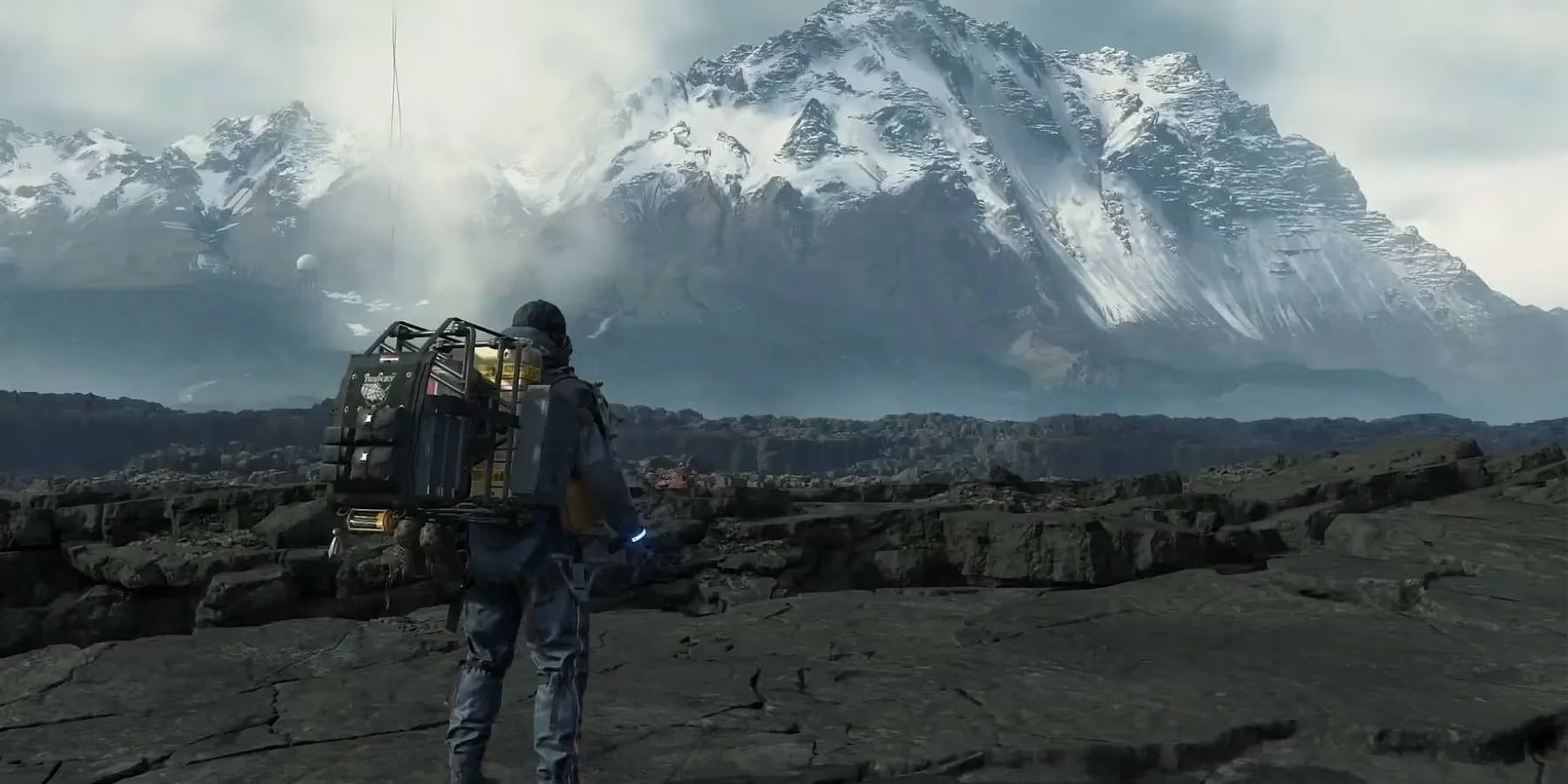
Death Stranding's world is a character in itself—a lush, reclaiming wilderness that whispers tales of human folly and nature's resilience. A deepened recycling system would make players active participants in this narrative, not just observers. Every vehicle broken down and rebuilt, every piece of gear crafted from salvaged parts, would be a tangible step toward healing the world. The game could introduce a 'Reclamation Progress' metric for different regions, visually showing how Sam's efforts clear pollution and allow flora to flourish. This mechanic would serve as a powerful metaphor: just as we must deconstruct our wasteful habits in the real world, Sam must deconstruct the ruins of the past to forge a sustainable future. It would be like watching a colossal, ecological clock being rewound by your own hands, each salvaged gear bringing the world closer to a forgotten harmony.
A Seamless Integration into the Death Stranding Flow
Critics might argue that such a system would disrupt Death Stranding's unique pacing. I counter that it would enhance it. The game already masterfully shifts between genres: hiking simulator, climbing challenge, stealth horror, and occasional brawler. Adding a thoughtful, resource-management sim layer would be a natural extension. Consider the potential gameplay arc:
| Phase | Activity | Emotional Tone |
|---|---|---|
| Journey | Traversing harsh landscapes with cargo | Solitary, determined, meditative |
| Conflict | Evading BTs or engaging MULEs | Tense, anxious, adrenaline-fueled |
| Reclamation | Salvaging a wreck at a safe haven | Focused, satisfying, purposeful |
| Creation | Fabricating new gear from salvaged parts | Hopeful, creative, rewarding |
This cycle would create a richer, more holistic gameplay experience. The reward for a dangerous delivery wouldn't just be likes and materials; it could be the discovery of a rare wreck site, packed with components for a powerful new exoskeleton or a faster, more durable truck. The act of building would carry the weight of history, knowing your new vehicle's chassis was once part of a pre-stranding war machine.
The Vision for 2026 and Beyond
As we look to the horizon for Death Stranding 2, the potential for innovation is as vast as the game's own landscapes. By embracing the meticulous, rewarding deconstruction of titles like Hardspace: Shipbreaker, Kojima Productions can evolve the 'Strand' genre once more. It would move beyond connecting infrastructure to connecting us intimately with the value of every resource, the story in every scrap of metal, and the quiet satisfaction of building something new from the bones of the old. This isn't just about adding a new minigame; it's about weaving the core themes of conservation, legacy, and renewal directly into the player's actions. In a world recovering from the Stranding, the most profound connection we can make might just be to the things we choose to take apart and the future we choose to build from them. The sequel has the chance to make us feel not just like a porter, but like an archaeologist of the future and an architect of hope, one carefully salvaged component at a time.