Death Stranding 2: Why Private Rooms Need a Personal Touch for Sam's New Journey
Death Stranding 2: On the Beach promises a transformative Private Room experience, blending deep personalization with Kojima's signature narrative flair.
As we gear up for the release of Death Stranding 2: On the Beach in 2025, the excitement is absolutely palpable. We're all strapping in to follow Sam Porter Bridges once more as he navigates the fractured remnants of America. But let's be real for a second—if there's one thing we've learned from Hideo Kojima, it's that the expected is just a starting point. The journey will be weird, wonderful, and full of those mind-bending moments only Kojima can deliver. While the core of connecting a broken world will likely remain, the whispers suggest a more critical look at the UCA's legacy. This deeper narrative shift has me thinking about all the little details, and one quiet corner of the first game is screaming for an evolution: Sam's Private Room.
Let's rewind. In the first Death Stranding, Private Rooms were these sterile, practical havens. You'd stumble in after a brutal trek through Timefall rain or a heart-pounding BT encounter, and it was...peace. A moment to just breathe. You'd recharge your batteries, literally and figuratively, swap out gear, and maybe mess with the mirror or the media player for a bit. It served its purpose, but man, after a while, that white-walled, minimalist vibe started to feel a bit...hollow, you know? It was like checking into the same generic hotel room over and over again.
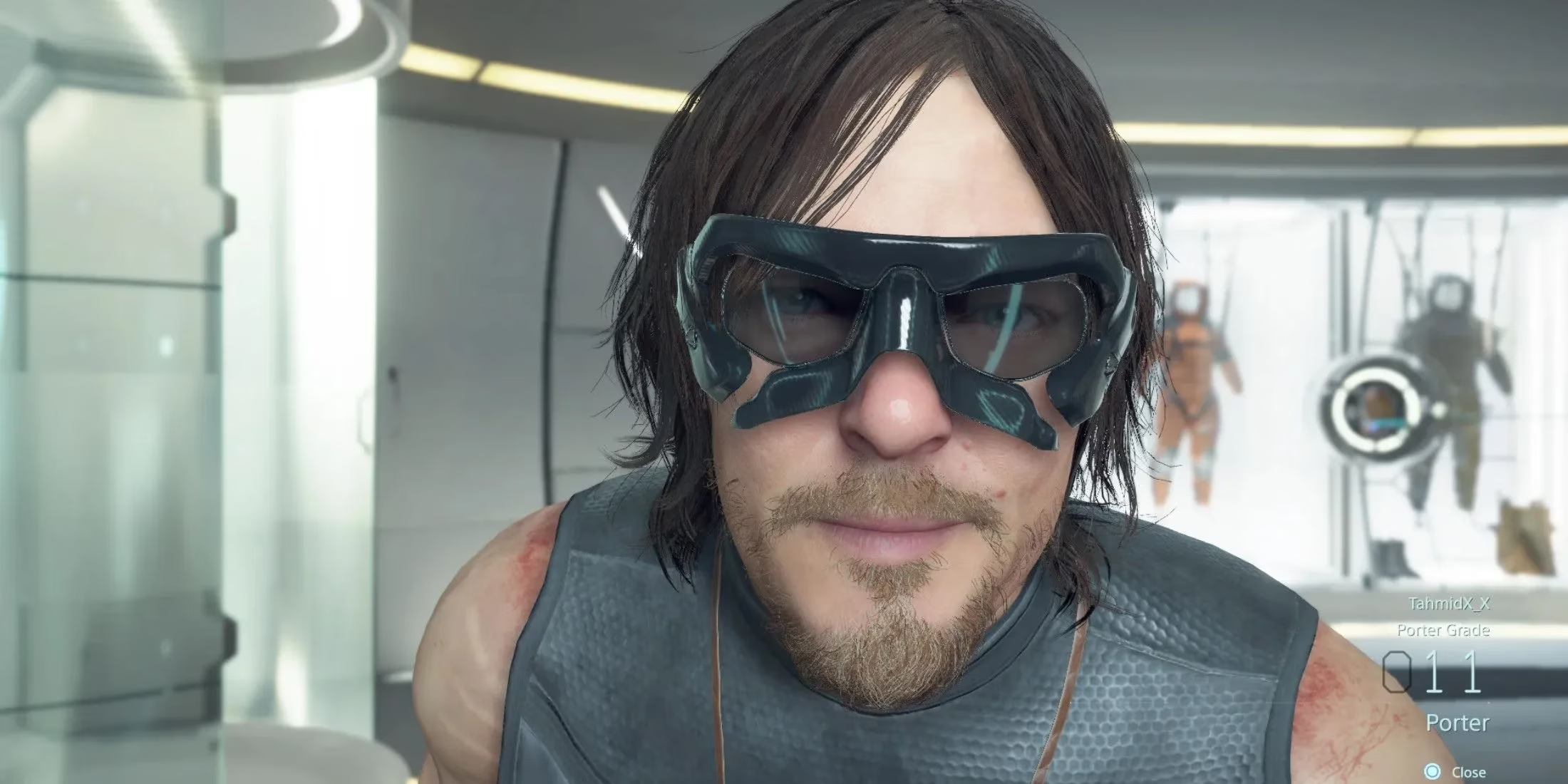
And that's the thing—that hollowness was probably intentional. The world of Death Stranding is one of repression and isolation. Sam started his journey as a closed-off porter, a man literally carrying the weight of the world on his back but unwilling to unpack any of his own emotional baggage. His room reflected that: a functional pod, not a home.
But here's the kicker. That's not who Sam is anymore. By the end of his first journey, he had formed Bridges—both the organization and the personal connections. He accepted his past, embraced his future as a father, and opened up. The Sam we're meeting in Death Stranding 2 is a changed man. So why should his private space feel like the same cold bunker from 2019?
This is where I see a massive opportunity for Kojima Productions. The Private Room (or whatever its equivalent will be called) needs to grow with Sam. It should become a canvas for his—and by extension, our—journey.
Why Personalization is the Missing Link
Think about it. We spent dozens of hours in that room. It was our pit stop, our safe house. But we never left a mark on it. Imagine if we could:
-
Display Collectibles: Remember that Quipu you got from the Veteran Porter? Or the Cryptobiote terrarium? What if we could actually place those on a shelf? It would turn the room into a museum of our travels.
-
Alter the Layout: Maybe add a workbench for tinkering with gear, or a more comfortable seating area. A little feng shui for the end of the world.
-
Change Aesthetics: Unlock different wall panels, lighting schemes, or even posters from the in-game Chiral Network as rewards for major deliveries. Nothing too crazy, but enough to show this space is lived in.
This isn't just about cosmetic fluff, though that's part of the fun. It's about narrative resonance. A personalized room would be a powerful, silent testament to Sam's character growth. He's putting down roots, however fragile they may be in a world of BTs. He's building a home, not just occupying a space. It creates a deeper connection between us, the player, and the virtual environment we return to time and again.
Beyond Decor: Making the Room a Gameplay Hub
Personalization can also tie back into gameplay loops in meaningful ways. What if...
-
Gear Crafting & Customization was centered in your room? Instead of a menu, you physically walk over to a workbench.
-
Data Analysis from your journey (BT encounter logs, terrain scans) could be reviewed on screens in the room, offering strategic insights for future trips.
-
Character Interactions could happen here. Imagine Lou (or other companions) leaving little notes or items for you to find when you return.
The room shouldn't just be a pause menu with walls; it should feel like the nerve center of your operations.
The Kojima Touch: Weird, Wonderful, and Personal
Of course, this is Kojima. We can't just have normal decorations. I'm fully expecting—and hoping for—the utterly bizarre:
-
A BB pod cleaning minigame that's weirdly therapeutic.
-
Figurines of bosses you've defeated that occasionally...move when you're not looking.
-
Sam's fourth-wall-breaking monologues becoming more frequent and poignant as the room fills with memories.
Heck, maybe the room itself could become a narrative device. What if its state visually deteriorates or changes based on key story beats? Now that would be a Kojima move.
| Death Stranding (2019) Private Room | Potential Death Stranding 2 Private Space |
|---|---|
| Sterile, white, and impersonal | Warm, customizable, reflective of Sam's journey |
| Pure utility (rest, gear change) | A hub for crafting, data review, and character moments |
| Static environment | Dynamic space that evolves with the story and player actions |
| Sam as a detached occupant | Sam as a resident building a home |
Look, at the end of the day, Death Stranding was always about connection. Connecting cities, connecting people, connecting a fractured society. In the sequel, as we question the costs of those connections, it's time to turn that theme inward. Let us connect with our own little corner of that world. Let Sam's room tell the story of where he's been and who he's become. After all he's been through, the man deserves a place to call his own. And as players who've walked every grueling mile with him... so do we.
So here's my wish for 2025: that when I first step into Sam's private space in Death Stranding 2, it doesn't just feel like a reset button. It feels like coming home. Even if home is a chiralium-lined bunker at the edge of a beach at the end of the world.