Death Stranding 2: The Anticipated Journey Beyond America's Ruins
Death Stranding 2 and Project Overdose promise Kojima Productions fans a bold, expanded world beyond the original’s condensed America.
As 2026 unfolds, the gaming world still holds its breath, waiting for Hideo Kojima's next move. Ever since he struck out on his own after that big split from Konami, fans have been on the edge of their seats, you know? His debut with Kojima Productions, Death Stranding, wasn't just a game; it was a phenomenon. It hit a nerve, blending a haunting, post-apocalyptic world with a stubborn kind of hope about people pulling together. Released when the real world felt pretty fractured, its message of connection felt like a lifeline. Now, with whispers of Death Stranding 2 swirling and the official reveal of Project Overdose with Xbox, everyone's asking: where do we go from here? One thing's for sure—the sequel can't just tread the same old ground.
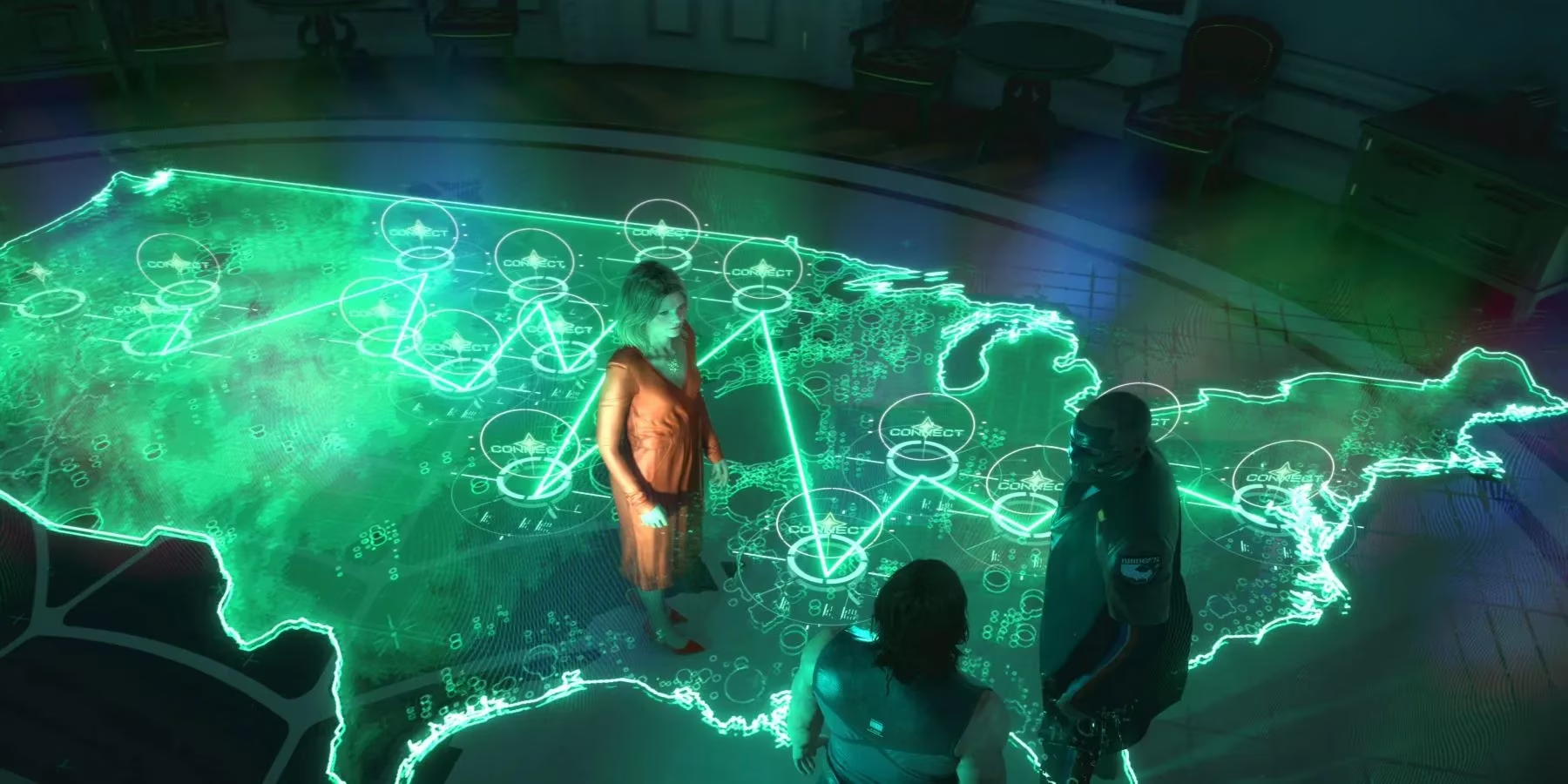
The Foundation: A Condensed America
The first game took players across a shattered version of the United States, now called the United Cities of America (UCA). The core mission for Sam Bridges was a monumental trek, connecting isolated "knot" cities into a chiral network. To make this journey playable, Kojima took some creative liberties, condensing the vast American landscape. This condensed scope worked perfectly for a narrative about rebuilding from the ashes, even if some folks initially pegged it as just a fancy walking simulator. But let's be real, that first journey set a high bar. For a sequel, players are hungry for more—a bigger world, new horizons.
The Sequel's Dilemma: To Return or to Roam?
A major question mark hangs over the project: who's coming back? Sam Bridges was last seen slipping off the grid. If Norman Reedus reprises his role, logic suggests the story might still be rooted in America. But after the first game's epic cross-country haul, a simple retread just won't cut it. Fans will expect evolution, not repetition. Kojima Productions faces the classic sequel challenge: how to honor the original while boldly going beyond it. The studio's got its work cut out for it.
Potential Pathways: Expanding the Map
Assuming the sequel doesn't leap to a completely different continent, the most logical step is to expand the playable borders. The entirety of North America presents a tantalizing canvas. Imagine traversing the rugged wilderness of Canada or the frozen frontiers of Alaska. 😲 This expansion would offer:
-
Fresh Terrain: New environmental challenges, from dense boreal forests to icy tundras.
-
Narrative Growth: A natural progression of the "Strand" concept, connecting not just a country, but a continent.
-
Scale: It would truly make the sequel feel bigger in every sense.
Narratively, this could elevate the connection premise from national to international, potentially laying the groundwork for a UCA-led global network—a kind of post-stranding United Nations built on chiral links.
An alternative route could point south. A journey through Mexico into the diverse landscapes of South America would offer equally rich new ground. However, both expansion ideas come with a need for sensitive storytelling. A game fundamentally about building bridges through goodwill would want to steer clear of any unintended parallels to historical imperialism or conquest, a consideration that feels especially pertinent in our current global climate.
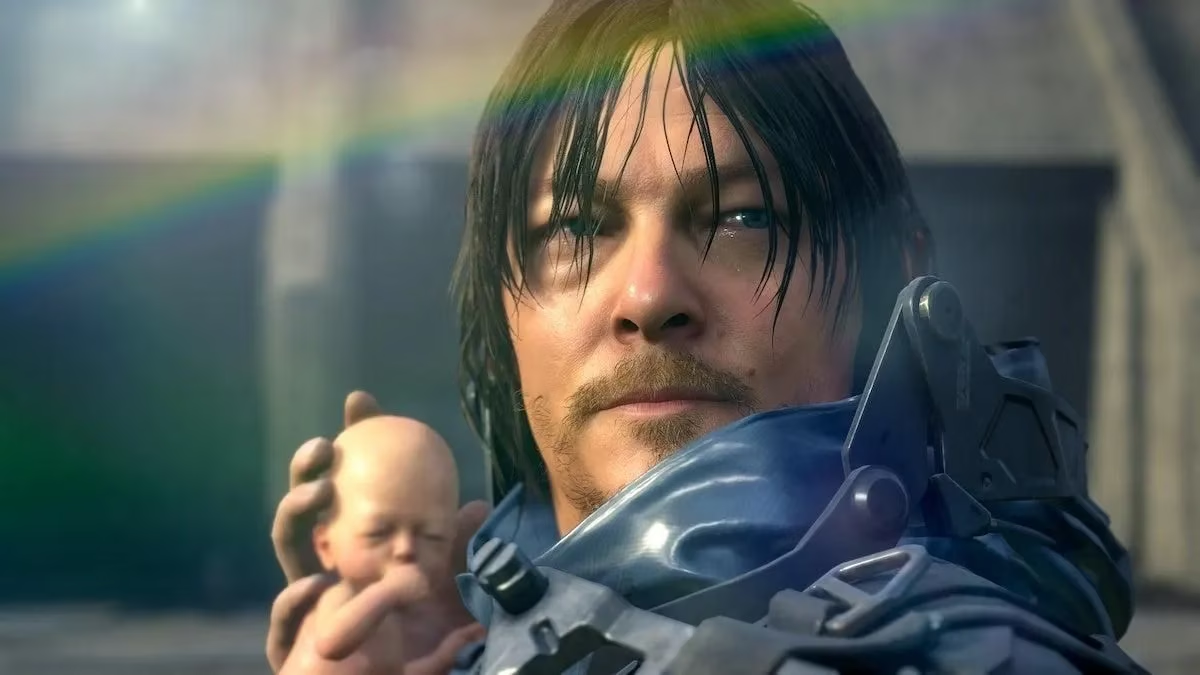
The Weight of Expectation
Whatever direction Kojima and his team choose, they are acutely aware of the legacy they must uphold. Death Stranding was a bold, idiosyncratic statement. The sequel needs to match that ambition in scale and heart. It's not just about a bigger map; it's about deepening the themes of isolation and connection that resonated so powerfully. Will we see a continent-spanning network? A new protagonist in a new land? The possibilities... are vast. The gaming community waits, hoping the next delivery is worth the long wait. After all, in the world of Death Stranding, the only way forward is together.