Death Stranding 2's 30-40 Percent Saga: What That Number Really Meant
Death Stranding 2: On the Beach's '30–40%' Kojima update was a balancing pass, not full-game progress—so its 2025 target wasn't doomed.
I still get a kick out of how one sentence can send the gaming internet into a tailspin. Back in 2024, during Tokyo Game Show, Hideo Kojima mentioned that Death Stranding 2: On the Beach was sitting at around 30 to 40 percent. The headline practically wrote itself: the sequel was 'only' 30 to 40 percent complete, yet it was still targeting a 2025 launch. Cue the hot takes, the doomscrolling, and the usual chorus of armchair producers. As a player who has followed Kojima Productions long enough to know the man loves a riddle, I wasn't buying the panic. The devil, as always, was in the details.
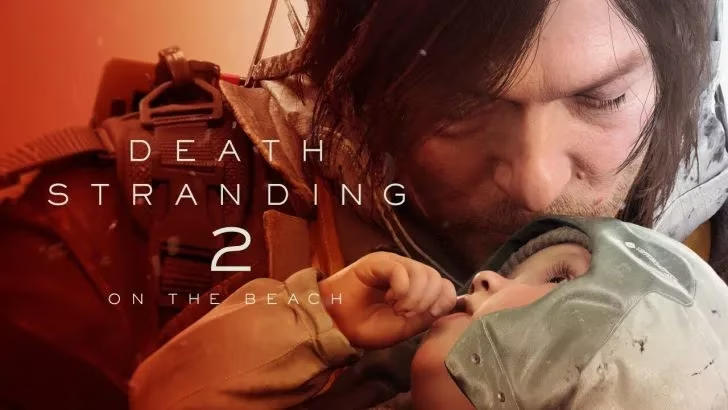
The pushback came quickly. Folks on social media pointed out that the 30 to 40 percent figure may not have been about the game's total development or even the Japanese voiceover recording. Kojima was talking about his current work balancing the parts that individual teams had already delivered. In other words, he may have been 30 to 40 percent done with that balancing pass, not 30 to 40 percent done with the entire game. For a project that was, at worst, around 14 months away at the time, a full-game completion number that low would have been a straight-up eyebrow-raiser. The community note got it wrong too, which is a tidy reminder that even crowd-sourced fact-checking can fumble the ball.
The Number That Launched a Thousand Hot Takes
Here's the thing: game development isn't a single progress bar. It's more like a messy kitchen with several cooks, each plating different dishes while the head chef runs around tasting, seasoning, and yelling about timing. Kojima saying he's balancing team outputs is not the same as saying the whole meal is half-cooked. That distinction matters.
| Claim | What it sounded like | What it likely meant |
|---|---|---|
| '30 to 40 percent complete' | The whole game was less than half done | Kojima was 30 to 40 percent through a balancing pass |
| 'Still targeting 2025' | A rushed, impossible deadline | A plausible window if the core work was further along |
| 'Development is behind' | Panic stations | A context-free number doing overtime |
Long story short, the original headline was off the mark. The more accurate read was that Kojima was deep in the unglamorous work of tuning the parts his teams had built. That's the kind of task that can swallow months and still look like 'only' a percentage point on a slide. I've seen enough behind-the-scenes development stories to know that the final 10 percent often feels like 50 percent. The proof is in the pudding, and the pudding was still in the oven.
What the Game Was Cooking
Even back then, Death Stranding 2: On the Beach looked set to outdo the first game in several wild ways. The Photo Mode was described as wild and, more intriguingly, capable of influencing the story in some ways. That's a very Kojima flex: turn a photo tool into a narrative lever. The game was also set to feature animated in-game concerts with actual artists. Not a pre-rendered cutscene. Not a soundtrack drop. An in-game concert. If that doesn't get your attention, I don't know what will.
For the record, the launch plan was PlayStation 5 in 2025. A PC version had not been announced, though the smart bet was always around a year after the console debut. That was an educated guess, not a promise. I won't pretend the original report gave us a PC date, because it didn't. The sensible play was to wait, watch, and keep expectations flexible.
The 2026 Check-In
With 2026 now on the clock, that 2024 episode reads like a masterclass in why context matters. The 2025 PS5 launch is in the rearview mirror, and the conversation has moved on from 'is it finished?' to 'how does it hold up?' That's the natural life cycle of a big release. The 30 to 40 percent saga is a time capsule of pre-launch nerves, incomplete quotes, and the internet's love of a scary number.
As a player, I take three things from it. First, a percentage without a subject is about as useful as a controller with no buttons. Second, community notes are helpful but not gospel. Third, Kojima Productions knows how to keep people guessing, and that's part of the show. The studio didn't need a PR spin cycle; it needed people to read the sentence in context. No sweat, right?
Would I have loved a cleaner answer at Tokyo Game Show? Absolutely. But the messy version is more instructive. It shows how quickly a mid-sentence estimate becomes a headline, and how hard it is to put the genie back in the bottle. For Death Stranding 2: On the Beach, the number was never the story. The story was the work behind it: balancing, tuning, and stitching together a sequel that aimed to be bigger, weirder, and more ambitious than the original. In 2026, that's the takeaway I'm keeping. The rest was just noise with a percentage sign.