Death Stranding 2: Release Speculation, Character Shifts, and Narrative Mysteries in 2026
Death Stranding 2 release date speculation and Fragile's pivotal role promise a thrilling, transformative sequel for eager fans.
Reflecting on the journey since that electrifying reveal at The Game Awards, the path to Death Stranding 2 has been one of intense speculation and patient waiting. Back in late 2022, a seemingly innocuous detail from a PlayStation Studios Visual Arts senior artist's profile ignited a firestorm of hope, suggesting a potential 2024 launch. That momentary glimpse, though quickly amended, became a foundational piece of fan lore. Years have passed, and while that specific window came and went, the core questions it raised about the sequel's development timeline, narrative direction, and character focus have only grown more profound. From my perspective, the evolution of this project mirrors the complex, interconnected world Hideo Kojima first introduced us to—a tapestry woven from leaks, theories, and the undeniable impact of real-world events.
🔍 The Elusive Release Window: From Leaks to Reality
The initial buzz centered squarely on a potential release date. The artist's profile mention was a classic case of a breadcrumb leading to a banquet of theories. At the time, a 2024 target seemed ambitious yet plausible, especially when considering the efficient development of titles like God of War Ragnarok, which masterfully reused assets. However, the gaming landscape has only become more demanding. As we stand in 2026, it's clear that the creation of a visionary sequel like this is a monumental undertaking. The original Death Stranding was a genre-defining experience built from the ground up, and its follow-up appears poised to expand that universe in significant ways. While the 2024 hint proved optimistic, it established a crucial timeline for the project's active development phase, reminding us that these worlds take time to build properly. The silence since has been telling, suggesting a focus on depth and polish over rushed deadlines.
👥 A Shifting Focus: The Rise of Fragile
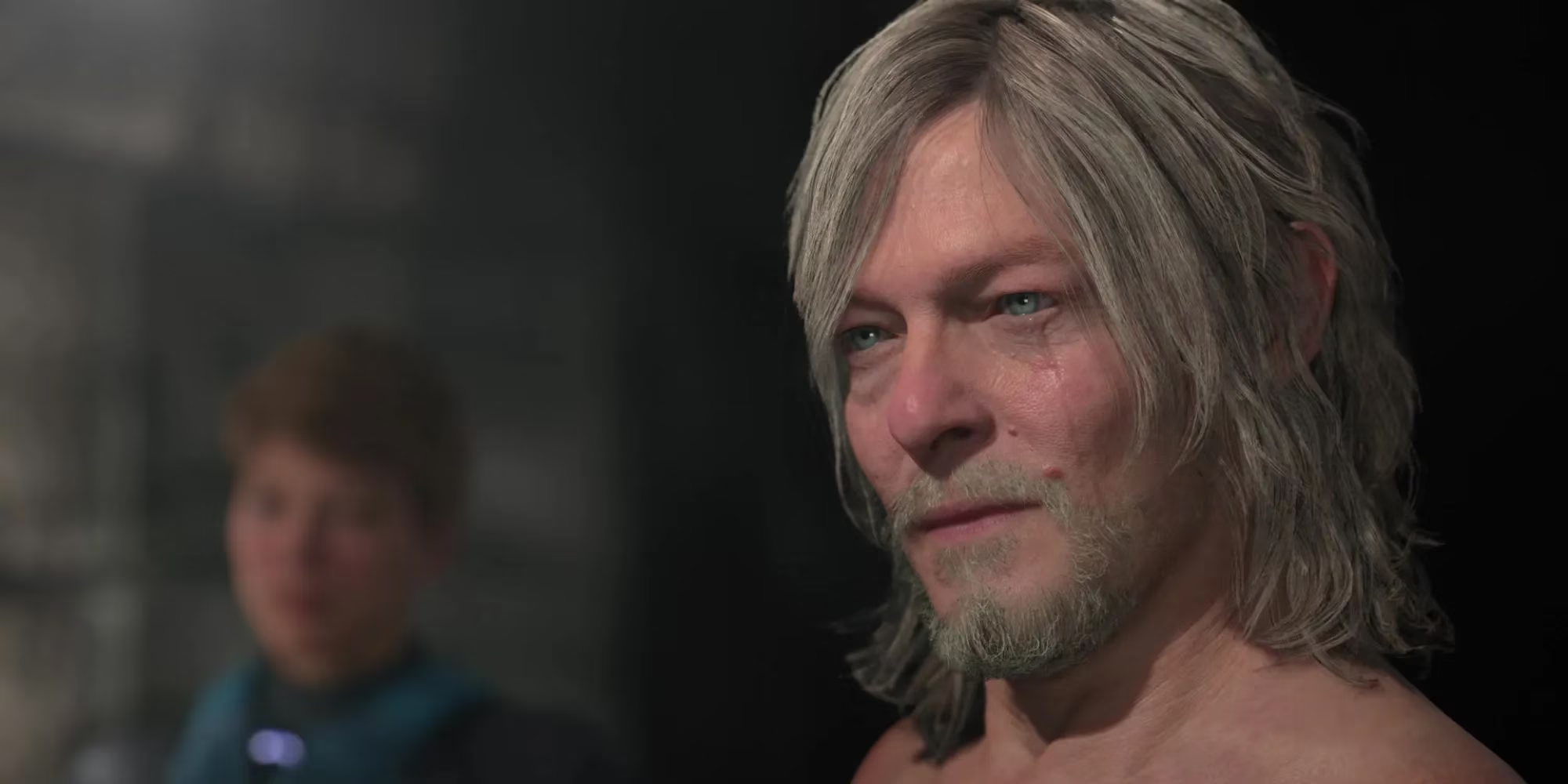
One of the most compelling narrative threads from the early reveal was the pronounced focus on Fragile. The trailer made it abundantly clear: she is central to this new chapter. The speculation that she might step into a playable role has only intensified with time. Her visual prominence, even overshadowing Sam Bridges in those initial frames, and the intriguing reversal of their apparent ages, strongly suggests a fundamental shift in perspective. Playing as Fragile would offer a radically different lens through which to experience the United Cities of America and its chiral network. Her unique abilities, tied to her condition and history, could revolutionize traversal and combat mechanics. This isn't just a cosmetic change; it's a potential overhaul of the core gameplay loop, emphasizing agility, temporal manipulation, and a deeply personal connection to the world's haunting phenomena.
⏳ Unraveling Temporal Enigmas: BBs and Reverse Timefall
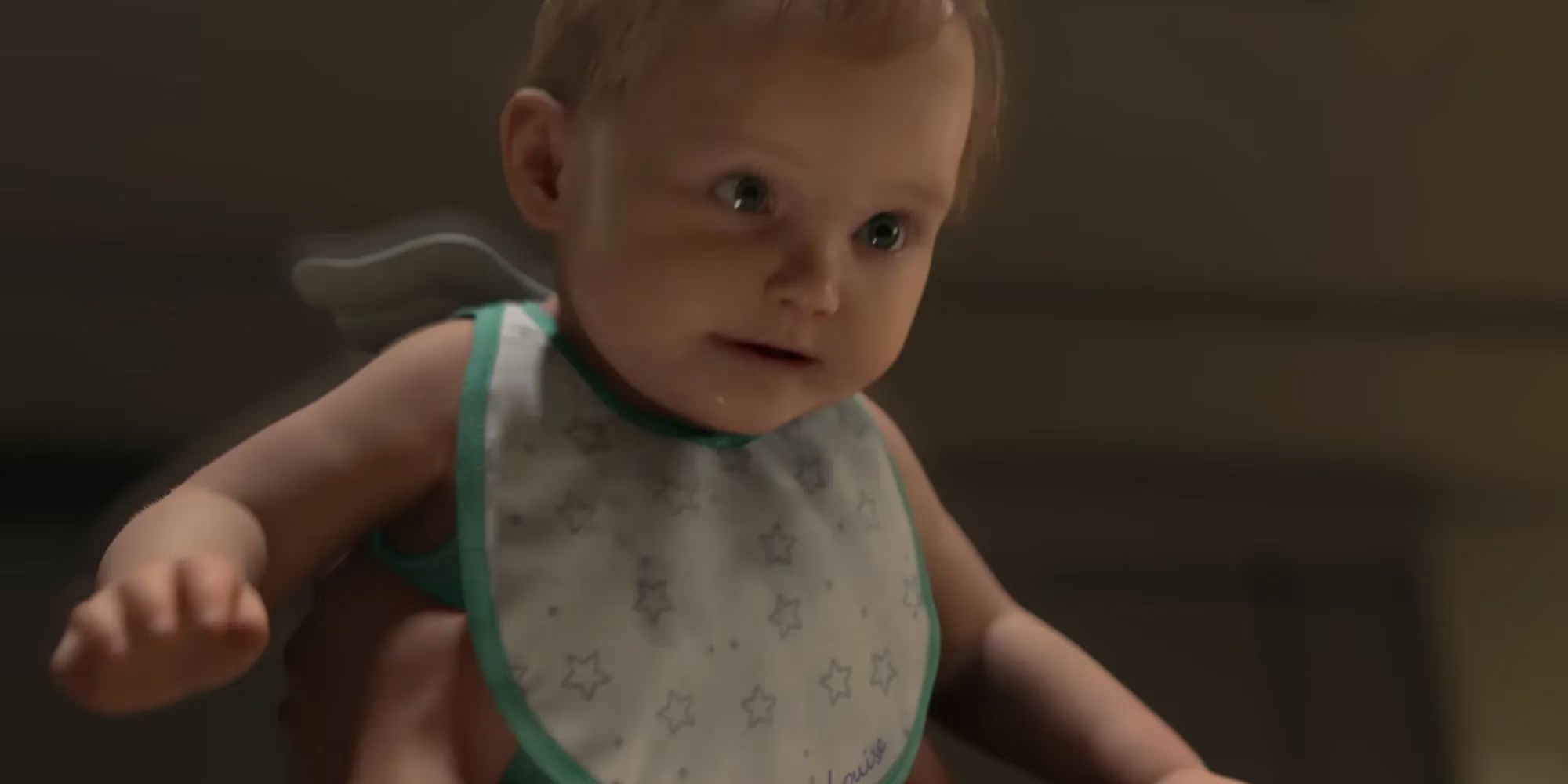
The narrative mysteries presented are quintessential Kojima. The image of Fragile holding Louise—the very Bridge Baby Sam nurtured—immediately ruled out simple linear progression. Instead, the community latched onto the theory of Reverse Timefall. This isn't mere time travel; it's a localized, physical regression. The implications are staggering and deeply philosophical:
-
On a BB (Bridge Baby): Would exposure cause it to regress to an earlier fetal stage, or unravel its existence entirely? Could it create a paradox of origin?
-
On the Environment: Could it heal the scarred landscape, restoring flora and structures to a pre-Die-Hardman state?
-
On Characters: What would reversing the physical decay of Timefall do to someone like Fragile herself?
These questions form the bedrock of the sequel's promised mind-bending story. The fact that the global COVID-19 pandemic forced a rewrite of the game's plot only adds another layer of meta-commentary, blurring the lines between the game's dystopia and our recent past.
🎮 Anticipating the Evolution of Gameplay and Theme
Looking ahead from 2026, my anticipation is built on how these narrative pieces will translate into interactive systems.
| Aspect | Speculation & Potential |
|---|---|
| Core Gameplay | Enhanced social strand system, possibly managing multiple courier networks. Playable Fragile could introduce phased travel or temporal puzzle-solving. |
| World State | A landscape further transformed by Reverse Timefall, creating zones of pristine past and accelerated decay side-by-side. |
| Core Theme | Moving beyond connection to explore preservation, legacy, and the cost of rewriting history. |
The sequel has the potential to deepen the original's meditation on isolation and connection by asking: What do we do with the connections we've made? How do we protect them from being unwritten? The promise of a "significant" role for Fragile hints at a story that is more intimate, perhaps dealing with motherhood, sacrifice, and carrying the literal and figurative burdens of the past into an uncertain future.
In conclusion, the journey to Death Stranding 2 has been a slow, deliberate strand-forming process of its own. From a leaked date that set expectations to a narrative pivot centered on Fragile and cosmic mysteries, every piece of information feels intentionally placed. As we await more concrete news, the theories around Reverse Timefall and character roles provide a rich tapestry of anticipation. This isn't just a wait for a game; it's the patient anticipation of stepping back into a world that challenged how we think about play, story, and our place within them. The next delivery cannot come soon enough. 😊