Death Stranding 2: Learning from the Past to Forge a New Narrative Future
Death Stranding 2 and narrative design captivate with immersive storytelling, evolving the haunting atmosphere for a compelling gaming experience.
As I reflect on the haunting world of Death Stranding from my own experiences and the broader gaming landscape of 2026, I find myself drawn back to the game's unique storytelling—a tapestry woven with both breathtaking visuals and sometimes cumbersome exposition. The original game's atmosphere was like a persistent, low-hanging fog, beautiful yet obscuring, while its narrative delivery occasionally felt like receiving a complex scientific briefing through a crackling radio. With Death Stranding 2 on the horizon, I believe there's a profound opportunity to evolve how this story is told, shifting from being lectured about this broken world to being truly immersed within its fractured, beating heart.
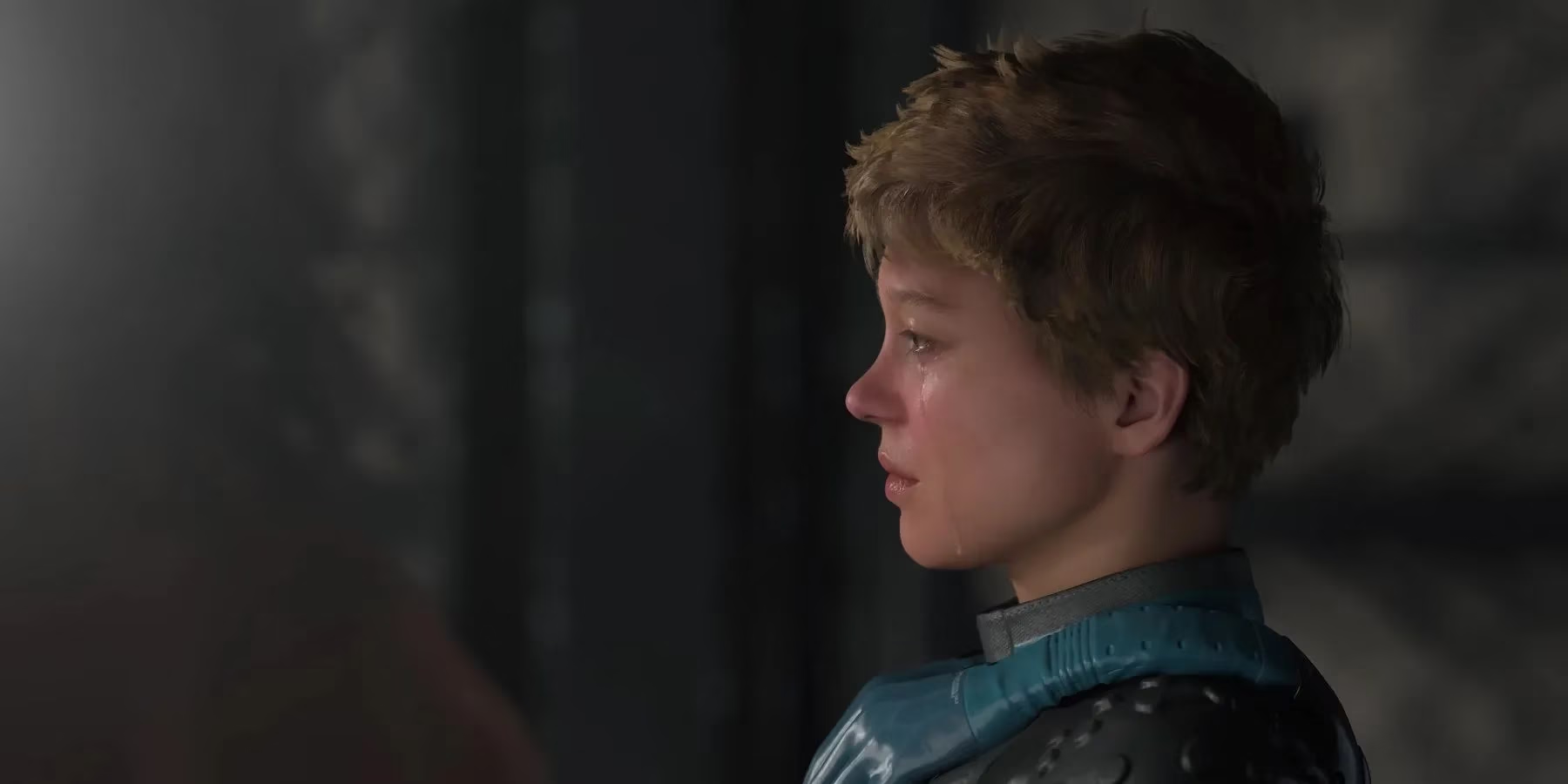
One of the most poignant memories I have is not of a long monologue, but of a powerful, wordless moment shown to me: the flashback of Fragile willingly running through the corrosive Timefall to save South Knot City. That scene did more to establish her character's moral fiber and the terrifying power of antagonist Higgs than any lengthy explanation could. It was storytelling through visceral experience—a principle I hope becomes the cornerstone of Death Stranding 2's narrative design. The game's lore is a sprawling, delicate ecosystem; explaining it through endless dialogue is like trying to describe a symphony solely by listing its notes. We need to hear the music.
The original game hinted at this better method through other characters' perspectives, even if inconsistently. I recall Deadman's explorations into nightmares without Sam, and the glimpses into the past from Mama and Heartman. Yet, too often, these backstories were still delivered as monologues—characters telling Sam (and by extension, me, the player) their history while I passively listened. For a sequel promising an even larger cast, this approach risks creating a narrative logjam. We need the camera to pull away from Sam more often, to let us witness these stories firsthand. Imagine seeing the formative moments of new characters unfold not through told testimony, but through lived, playable, or cinematic fragments. This wouldn't just be fan service; it would be essential world-building.
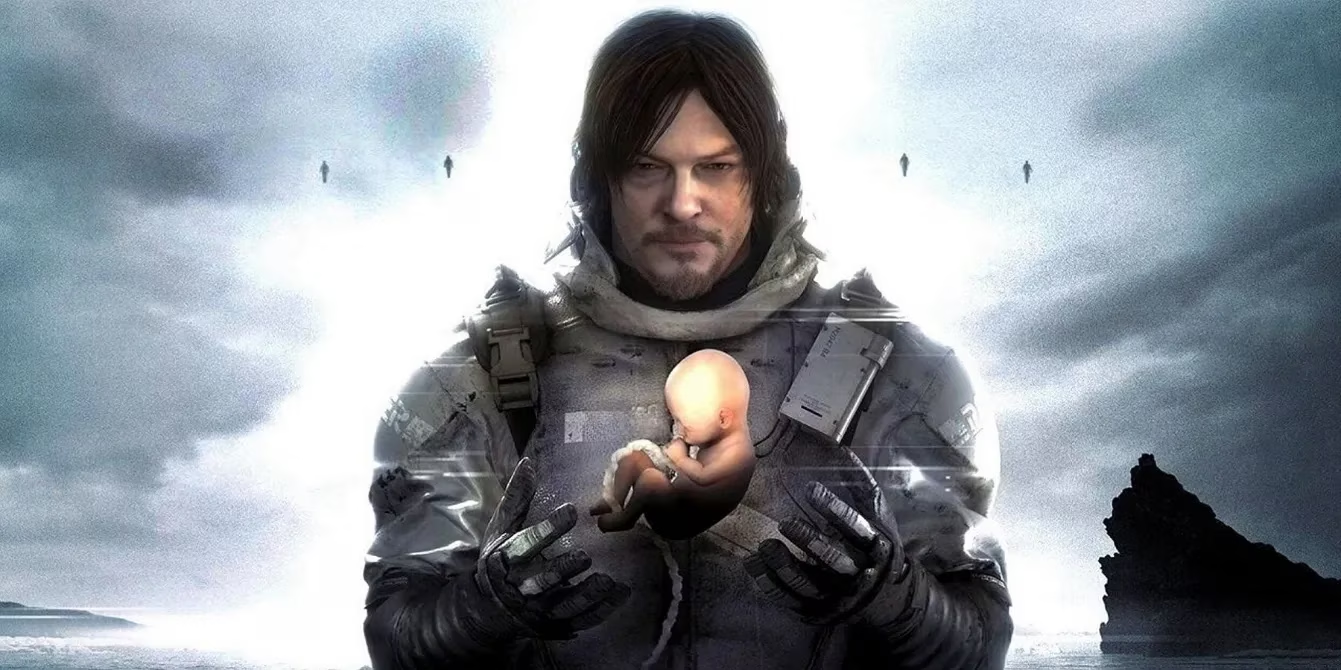
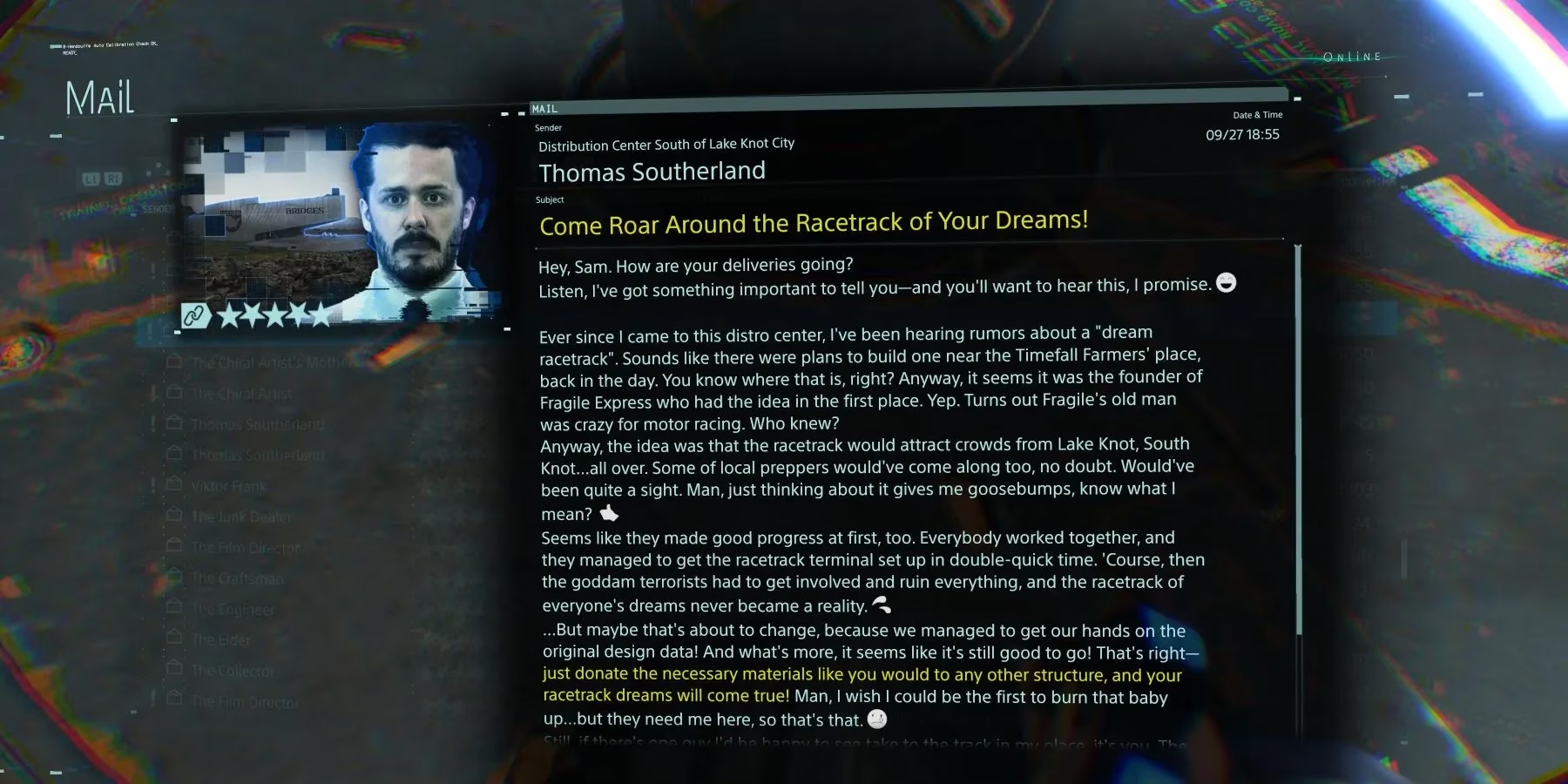
However, I understand the practical constraints. Giving every member of a large ensemble a fully-realized, cinematic flashback sequence is a monumental—and potentially bloating—task. This is where the original game's more subtle storytelling tools can be expanded. The emails and journal entries found in the world, like the heartbreaking notes from Sam's first wife, Lucy Strand, were narrative gems. They were optional, intimate, and discovered rather than dictated. Reading Lucy's journals felt like piecing together a ghost's memory from scattered photographs left in the rain—each fragment adding a layer of profound sadness and context to Sam's journey and his connection to BB/Lou.
Death Stranding 2 could masterfully blend these approaches:
🔹 Cinematic Show, Don't Tell: For pivotal, lore-defining moments (like Fragile's sacrifice), use the full power of Kojima Productions' cinematic craft to show us the event.
🔹 Environmental & Textual Lore: For deeper character backgrounds and world history, expand the system of discoverable narratives—audio logs, data chips, holographic recordings, or even visions triggered in specific locations.
🔹 Controlled Perspective Shifts: Perhaps brief, controlled segments where we play as another character during a key memory, not as a full flashback chapter, but as a vital, interactive story beat.
This balanced approach respects the player's intelligence and agency. It turns the act of understanding the world into a journey of discovery, mirroring the physical journey of connecting its isolated outposts. The story becomes a landscape to be traversed and understood, not a lecture to be endured.
Looking ahead to 2026, player expectations for narrative integration are higher than ever. We crave stories that are woven into the fabric of the gameplay experience, not just layered on top. Death Stranding's world is too rich, too strange, and too emotionally charged to be conveyed through exposition alone. Its themes of connection, extinction, and legacy are like a vast, underground mycelial network—mostly unseen, but vital to everything that grows above. The sequel has the chance to let us explore those roots directly.
The first game laid an incredible foundation with its world-building and thematic ambition. Now, Death Stranding 2 stands at the precipice, ready to deliver on the promise of that world by revolutionizing how its story is told. By trusting more in visual storytelling, expanding its brilliant use of discoverable narrative fragments, and daring to shift perspective, it can create an experience that doesn't just tell us about the Stranding, but makes us feel its every reverberation in our bones. The future of this story shouldn't be explained; it should be uncovered, one connected step at a time.