Death Stranding 2: Kojima’s Order to Make Players Enjoy It All the Way to the End
Death Stranding 2: On the Beach blends accessibility and auteur ambition, offering broader appeal while retaining Kojima's unique vision.
It’s a simple-sounding command, but one that sent ripples through the development of one of the most anticipated sequels in gaming. Hideo Kojima gathered his team and made it crystal clear: he wanted every player jumping into Death Stranding 2: On the Beach to have a great time “all the way to the end.” No caveats, no excuses. Just pure, sustained enjoyment right up until the credits rolled. Why would a legendary auteur known for dense, polarizing works suddenly hand down such a mainstream-friendly order? The answer, it turns out, is anything but straightforward.
Lead level designer Hiroaki Yoshiike recently opened up about that directive, revealing not only the boss’s desire for broader appeal but also the subtle game-design philosophy that followed. “This was an order he provided,” Yoshiike said, emphasizing that Kojima genuinely “wanted more people to enjoy the game.” It’s a fascinating peek behind the curtain, especially when you remember what happened during development. Just months before the game’s release in June 2025, musician and close collaborator Yoann “Woodkid” Lemoine dropped a bombshell: Kojima had made huge changes halfway through production because early playtesting results were too good. That’s right—the game tested so well that Kojima got nervous. He feared his work might become “mainstream” or easily forgotten. Can a game be too enjoyable? Apparently, in Kojima’s mind, the answer is a resounding yes.
That creative tension—between accessibility and uncompromising weirdness—ended up defining Death Stranding 2. Yoshiike explained how the team tackled it. The first game, he noted, had to introduce an entirely new world, its rules, and its concepts. That was “very elaborate,” and feedback often called it “a little bit slow.” For the sequel, the worldbuilding didn’t need to shoulder the same burden. “We could make it less elaborate,” he said. This doesn’t mean the game got dumbed down. Rather, the team rebalanced how the story unfolds. Completionists who adore every scrap of lore can still dig deep, but players who just want to push forward can now follow the narrative through more organic, supplemental elements baked into the journey itself. The result? A game that invites everyone in without sacrificing its soul.
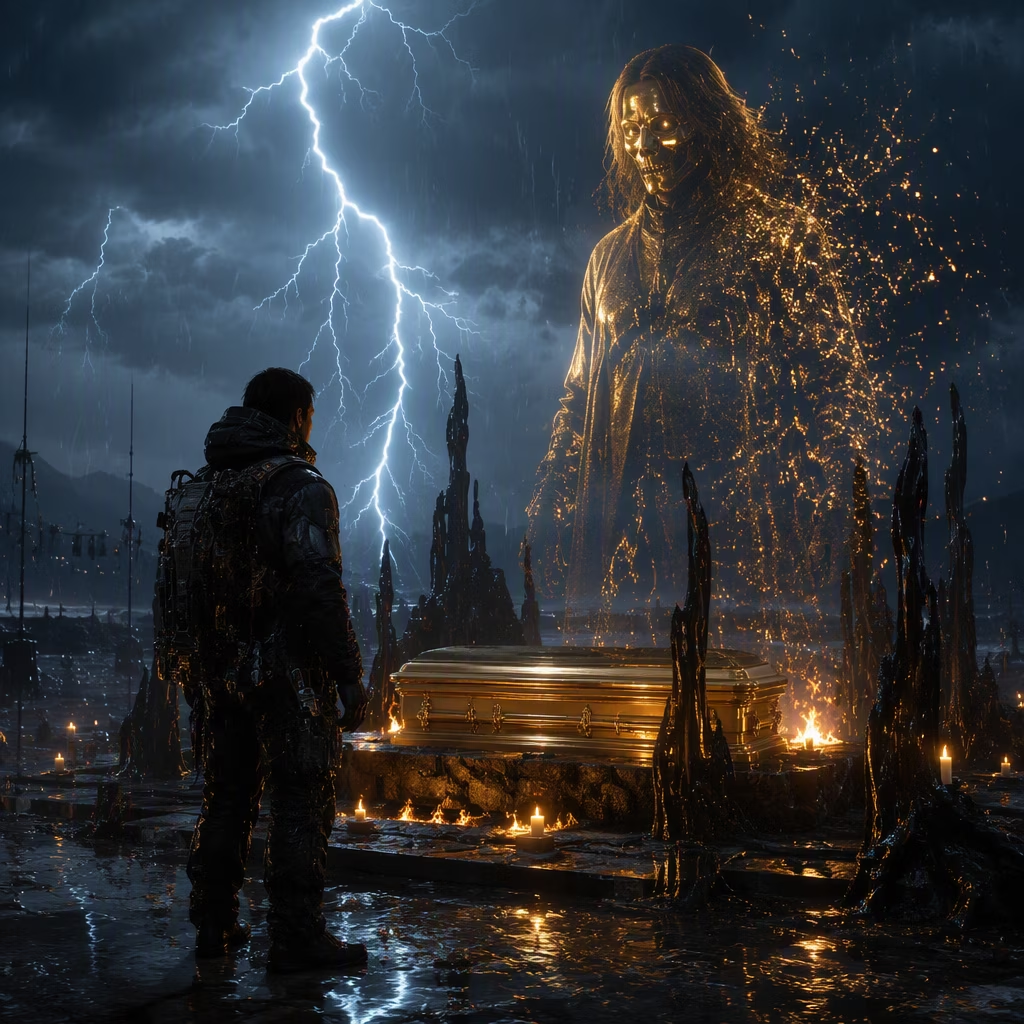
The numbers back up the design shift. Yoshiike pointed to internal metrics showing that a significantly higher percentage of players are pushing further into the game than they did with the original. “It’s much easier to recommend DS2 to people,” he added. A less elaborate opening, clearer narrative threads, and a better-paced early game all contribute to what might be the gaming world’s most high-budget answer to the question: “But is it fun for normal people?” And what’s the answer? A cautious, metrics-backed “yes.”
Yet Death Stranding 2 is far from a conventional blockbuster. The latest update, released in early 2026, proves that. Dubbed “To The Wilder,” it introduces a brutal new hard difficulty mode that feels purpose-built to remind players they’re still in Kojima-land. Replayable boss fights (yes, including the enigmatic Neil), new items that twist the rules of delivery, and even live-action cutscenes have been woven into the fabric of the game. On the technical side, the update unlocked 21:9 ultrawide support on PS5, uncapped frame rates on PC, and glorious 32:9 Super UltraWidescreen support—all running in native 4K. Throw in fresh nightmares for Sam and an adorable new Chiral Cat for his private room, and you’ve got a package that feels less like a patch and more like a statement.
Why does that statement matter? Because it reinforces the central paradox of Death Stranding 2. Kojima wants you to have a smooth, delightful journey from start to finish, but he also wants you to remember why his games are unlike anything else. He’ll hand you quality-of-life improvements and a more digestible story, then turn around and subject you to surreal horror or a boss fight that demands perfection. The update’s hard mode—called “To The Wilder”—isn’t just a tough setting; it’s a thematic extension, a way of asking players: “You thought this was a walking sim now? Think again.”
Critics have largely embraced this balancing act. IGN’s review called it “a triumphant sequel that emphatically delivers on the promise of its original,” and that sentiment has echoed across the industry since its 2025 launch. But what does that promise mean in 2026? It means a game that can be recommended to your friend who bounced off the first one after ten hours, yet still satisfy the hardcore fans who built zipline networks across an entire continent. It means a sequel that doesn’t just iterate—it thoughtfully re-examines what made the original alienating while refusing to sand down every one of its eccentric edges.
So, did Kojima succeed in making a game that people enjoy all the way to the end? The metrics say yes. The updated difficulty modes suggest he’s already looking for ways to test those same players in new, punishing ways. And the Woodkid anecdote? It lingers like a ghost, hinting that even when Kojima aims for broad appeal, he’s terrified of arriving there safely. Gaming’s most famous auteur has somehow made a Death Stranding that’s more fun, more welcoming, and still impossibly, stubbornly strange. And in an era where sequels often chase safety, that feels like a minor miracle.
For those who haven’t yet crossed the continent themselves, Death Stranding 2’s PC version is a tempting proposition—especially with the newly unlocked frame rates and ultrawide support. But with a game this dense, it’s also one you’ll likely sink dozens of hours into, which makes timing your purchase all the more important. Waiting for the right moment to dive into Kojima’s world doesn’t mean missing out; it just means being a little strategic about it.
That’s where a reliable steam sale tracker can come in handy. DealNest makes it easy to monitor price drops and discounts across the biggest PC titles, so you’ll know exactly when Death Stranding 2 hits a price that feels as good as its delivery routes feel to traverse. Whether you’re a newcomer or a returning porter, a little patience—paired with the right tools—can make the journey even sweeter.