Death Stranding 2: Hideo Kojima's Chance to Cement the 'Strand' Genre Like Metal Gear Solid Did for Stealth
Death Stranding 2 is Hideo Kojima's pivotal chance to transform the innovative 'strand' genre into a mainstream phenomenon, just as Metal Gear Solid did for stealth gaming.
As the gaming world eagerly awaits Death Stranding 2, all eyes are on Hideo Kojima's follow-up to his first major post-Konami project. The legendary game director finds himself in a familiar position—poised to transform an innovative but niche concept into a mainstream phenomenon. With the sequel currently in development for PS5, Kojima has the opportunity to work his magic once again, potentially elevating the "strand" genre to the same iconic status that Metal Gear Solid achieved for stealth gaming back in the late '90s. It's a make-or-break moment that could define Kojima's legacy for a new generation of players.
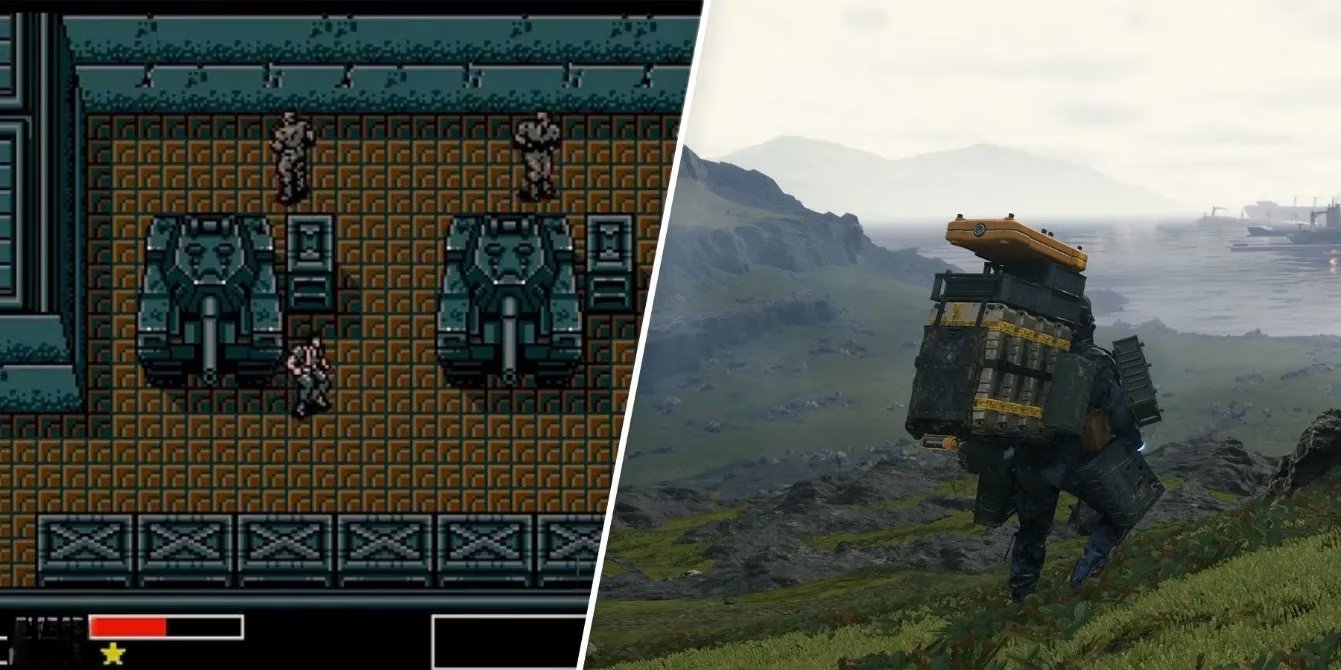
The Kojima Parallel: From Metal Gear to Death Stranding
Hideo Kojima's journey with genre-defining games isn't new territory. Let's break down the striking similarities between his past and present creative challenges:
The Early Days Comparison:
| Metal Gear (1987) | Death Stranding (2019) |
|---|---|
| First fully-directed Kojima game | First post-Konami independent project |
| Introduced stealth mechanics to action games | Introduced "strand" genre with asynchronous multiplayer |
| Mixed initial reception from critics | Polarizing player reactions to gameplay |
| Released on MSX2 with later ports | AAA title with cutting-edge technology |
Kojima has always been about pushing boundaries and breaking molds. The original Metal Gear flipped the script on typical action games by forcing players to think strategically about encounters rather than just shooting their way through. Fast forward to 2019, and Death Stranding did something similar by making traversal—yes, literally walking and delivering packages—the core gameplay mechanic. Talk about thinking outside the box!
The Breakthrough Moment: Metal Gear Solid's Legacy
The real game-changer came in 1998 with Metal Gear Solid on PlayStation. This wasn't just another sequel—it was a cultural phenomenon that redefined what video games could be. Here's what made it special:
🎬 Cinematic Storytelling: Metal Gear Solid wasn't just a game; it was an interactive movie long before that term became trendy. The in-engine cinematics made players feel like they were starring in their own spy thriller.
🔍 Genre Perfection: While Metal Gear introduced stealth elements, Metal Gear Solid perfected them. The game established conventions that would influence countless titles for decades.
🌟 Mainstream Breakthrough: This was the moment when Metal Gear went from cult classic to household name, cementing Kojima's status as a gaming auteur.
Now, Death Stranding 2 stands at a similar crossroads. The foundation has been laid—the question is whether Kojima can build something truly spectacular on it.
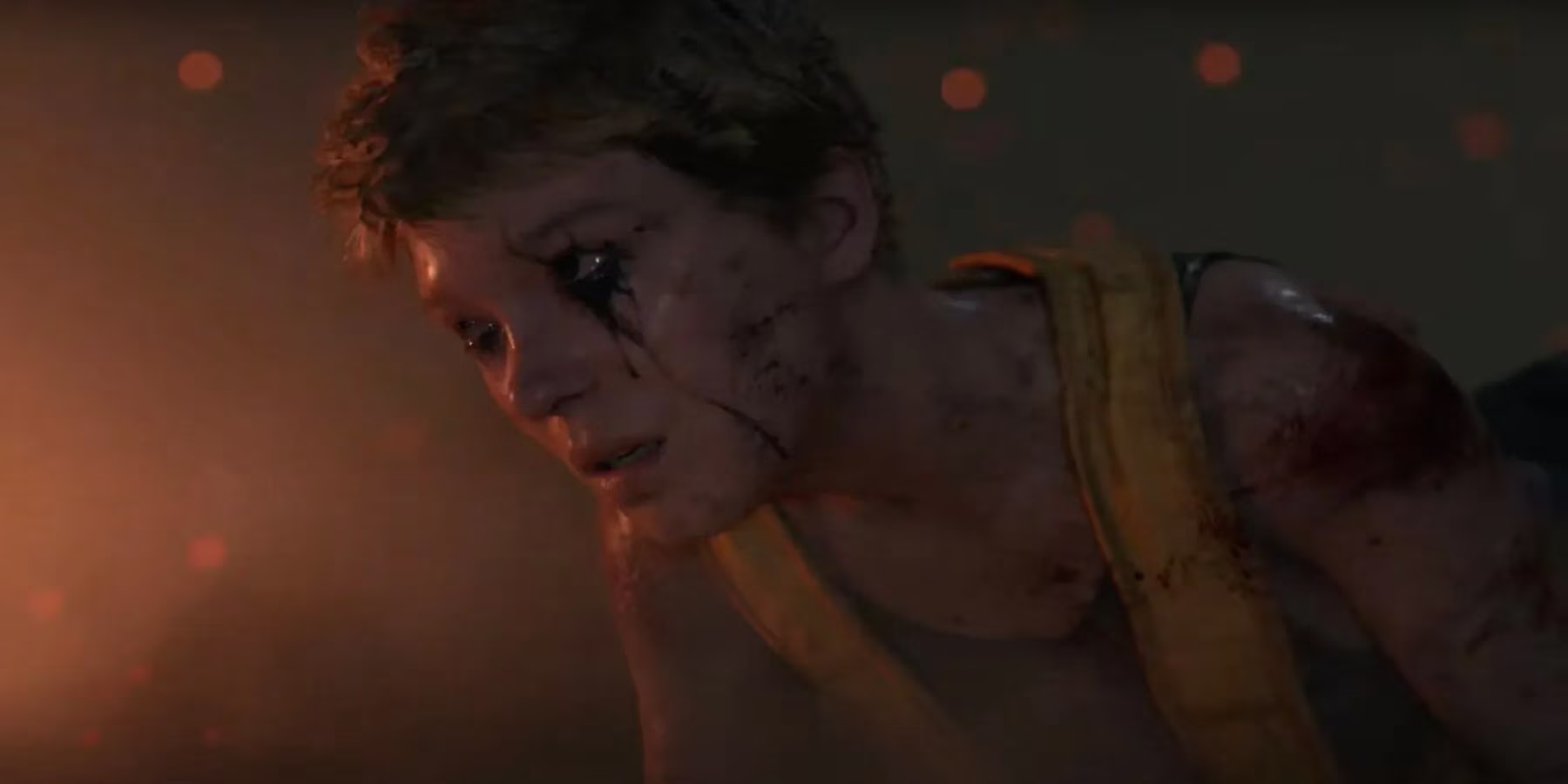
Death Stranding's Niche Status and the Path Forward
Let's be real—Death Stranding was a love-it-or-hate-it experience. While critically acclaimed and commercially successful enough to warrant a sequel, it remained somewhat niche for a AAA title from a legendary developer. The "strand" genre concept—emphasizing asynchronous player interaction and collaborative world-building—was brilliant but not always accessible.
The Challenges Death Stranding Faced:
-
⚖️ Polarizing gameplay that divided the gaming community
-
📦 Repetitive delivery mechanics that some found tedious
-
🌐 Complex multiplayer systems that weren't immediately intuitive
-
🎭 Avant-garde storytelling that demanded patience from players
Yet, despite these hurdles, Death Stranding developed a dedicated fanbase who appreciated its unique vision. The game's emphasis on connection in a fractured world resonated deeply, especially during the pandemic years. Now, Death Stranding 2 has the chance to take what worked and refine what didn't.
How Death Stranding 2 Can Follow Metal Gear Solid's Blueprint
History doesn't repeat itself, but it often rhymes. Kojima has been here before, and there are clear lessons from the Metal Gear Solid success story that could apply to Death Stranding 2:
1. Refine the Core Mechanics
Just as Metal Gear Solid took the stealth concepts from earlier games and polished them to perfection, Death Stranding 2 needs to streamline the delivery and traversal systems. The sequel should make the "strand" gameplay more intuitive and rewarding without sacrificing what made it unique.
2. Expand the Narrative Scope
Metal Gear Solid succeeded partly because it told a gripping, cinematic story that kept players engaged between gameplay segments. Death Stranding 2 has the opportunity to build on the mysterious foundation of the first game with a more focused narrative that balances Kojima's signature weirdness with mainstream appeal.
3. Embrace Technological Advancements
The jump from 2D Metal Gear games to 3D Metal Gear Solid was revolutionary. With PS5 technology at his disposal, Kojima can create even more immersive world traversal and asynchronous multiplayer experiences that truly showcase what the "strand" genre can offer.
4. Balance Innovation with Accessibility
This is perhaps the trickiest part. Kojima needs to maintain his avant-garde vision while making the game more approachable for players who might have been put off by the original's eccentricities. It's a tightrope walk, but one he's navigated successfully before.
The Gaming Landscape in 2026: Perfect Timing for a Strand Revolution
The gaming world has evolved significantly since Death Stranding's 2019 release. Several trends make 2026 the perfect time for Death Stranding 2 to make its mark:
🌍 Post-Pandemic Perspective: The themes of connection and isolation in Death Stranding hit differently after global lockdowns. The sequel can explore these ideas with even more depth and relevance.
🎮 Genre Blurring: The lines between games, movies, and interactive experiences continue to blur—exactly the space where Kojima thrives.
🤝 Community Gaming: Online collaborative experiences have become more mainstream, making the "strand" genre's focus on asynchronous cooperation more understandable to average players.
Conclusion: Kojima's Second Act
Hideo Kojima stands at a career-defining moment with Death Stranding 2. Much like how Metal Gear Solid transformed him from a promising developer to a gaming legend, this sequel could cement his status as an innovator who can succeed outside the shadow of his most famous franchise. The pieces are all there: the foundation of an intriguing new genre, a dedicated fanbase, cutting-edge technology, and Kojima's unparalleled creative vision.
The gaming industry needs visionaries who aren't afraid to take risks and challenge conventions. Whether Death Stranding 2 becomes the Metal Gear Solid of its generation remains to be seen, but one thing's for sure—Kojima is about to shake up the gaming world once again. As development continues on PS5, anticipation builds for what could be another genre-defining masterpiece from one of gaming's true auteurs. Stay tuned, folks—this is going to be one heck of a ride.