Death Stranding 2: From Norman Reedus' 2022 Leak to 2026 Triumph
Death Stranding 2 and Norman Reedus spark anticipation, redefining interactive storytelling and asynchronous multiplayer in gaming.
The year is 2026, and Hideo Kojima’s Death Stranding 2 is finally a tangible reality, a sprawling sequel that has redefined the boundaries of interactive storytelling and asynchronous multiplayer. But this journey began not with a cryptic trailer at a major gaming event, but with a casual, almost offhand remark by actor Norman Reedus during an interview four years ago. That leak, which sent shockwaves through the gaming community, has now culminated in one of the most anticipated releases of the generation.
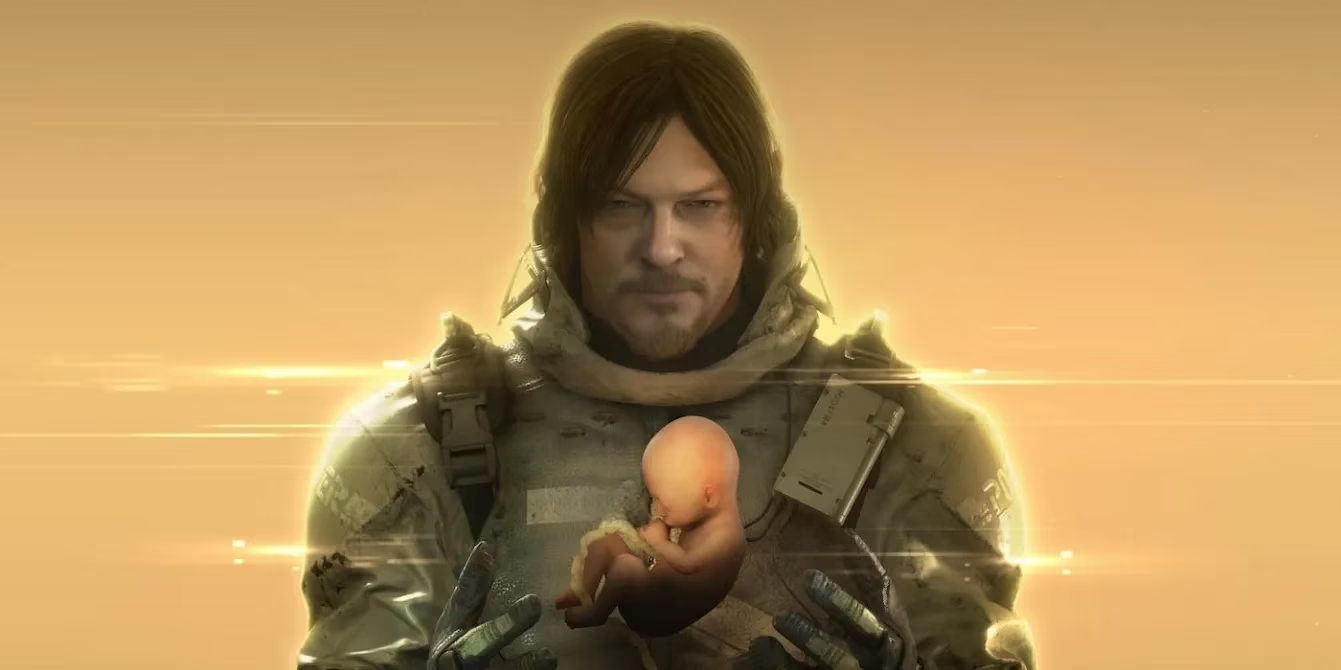
Back in early 2022, the Walking Dead star spoke to LEO magazine and let slip what many had only dared to hope: a sequel to the divisive yet mesmerizing Death Stranding was already in the works. “We just started the second one,” Reedus said with characteristic bluntness, acknowledging that the project was in its infancy. He reflected on how his unpredictable journey with Kojima began – a random meeting that led to him being scanned and motion-captured for the role of Sam Porter Bridges, the post-apocalyptic courier who connected a fractured America. The first game, released in 2019, went on to win numerous awards, and according to Reedus, that success was the direct catalyst for the sequel’s greenlight. “The game did so well, so we’re starting a second one,” he confirmed. At that moment, a rumor became news.
How a Whisper Became a Roar
But let’s rewind further. Why did Reedus’s words carry so much weight? After his highly publicized departure from Konami in 2015 and the rebirth of Kojima Productions as an independent studio, the legendary creator of Metal Gear Solid had staked his reputation on the baffling, beautiful gamble that was Death Stranding. It abandoned tactical espionage for a meditative trek across haunting landscapes, urging players to balance cargo, scale mountains with ropes and ladders, and avoid rather than engage hostile entities. The game’s asymmetrical social strand concept—where players left ladders, ropes, and bridges for one another in a shared world—was as unique as its cast, which included Norman Reedus, Mads Mikkelsen, and Léa Seydoux. Could lightning strike twice?
In the wake of that 2022 interview, speculation ignited. Was this the “large AAA game that will appeal to a wide audience” that Kojima had teased earlier, or was it the “smaller and more unusual project” meant for a niche platform? Rumors pointed toward the latter potentially being a PlayStation VR2 title, since Sony’s new headset had been announced just months prior. But the overwhelming consensus was that Death Stranding 2 was the blockbuster. And if work truly had just started, what did that mean for a release window? Would fans have to wait until 2025 or 2026 to once again step into the spiked boots of Sam Porter?
From Confirmation to Creation
The answer, as we now know in 2026, was a resounding yes—and it was worth every second. After Reedus’s confirmation, Kojima Productions entered a protracted period of silent but intense development. Occasional teases emerged on Kojima’s social media: a mysterious image of a table read, a silhouette that looked suspiciously like Elle Fanning, and a photograph of a bridge spanning a chasm of fog. The studio was clearly expanding the narrative scope, and when the first official trailer finally dropped in early 2024, it did not disappoint. Fans were treated to a glimpse of an older, wearier Sam, now accompanied by a grown-up BB (Bridge Baby), and hints of a new existential threat tied to the very concept of connection.
But how does a game about delivering packages evolve into a worthy sequel? The development team, guided by Kojima’s singular vision, zeroed in on deepening the environmental traversal that had defined the original. 2025 hands-on demos revealed a dynamic weather system where Timefall storms could flood valleys, forcing players to rethink their routes in real time. Vehicles became more customizable, and the asynchronous multiplayer was revolutionized: now players could leave behind entire safehouses, collaborative structures, and even holographic guides that sang songs in desolate landscapes. Combat, too, saw a reluctant but strategic overhaul—not by making Sam a soldier, but by introducing non-lethal gadgets that turned BTs into temporary environmental barriers rather than just obstacles to be feared.
The Kojima Magic: Blurring Lines
Can a delivery simulator truly become a blockbuster? In 2026, the sales figures and critical reception have answered with a deafening affirmation. Death Stranding 2 is not merely a game; it is a social experiment wrapped in a sci-fi epic. Kojima’s ability to blend high-concept philosophy with deeply human moments remains unmatched. Léa Seydoux’s Fragile returns with a vengeance, her arc intertwined with a new faction that weaponizes the Beach, and Mads Mikkelsen’s Cliff Unger appears in haunting flashbacks that unravel the mystery of BB-28’s origins. The cast swelled to include newer faces like Shioli Kutsuna and a memorable motion-captured performance from a critically acclaimed stage actor, adding layers of emotional gravitas.
What about that “smaller” project Kojima mentioned? As time revealed, it was indeed an immersive horror experience codenamed Overdose, which utilized VR tech to blur the boundary between player and protagonist. However, the massive success of Death Stranding 2 has since cemented Kojima Productions’ reputation as a studio that can deliver both avant-garde art and mainstream appeal. The 2022 leak by Norman Reedus might have felt premature, but it gave the community a gift: four years of feverish theorycrafting, hope, and the slow-burn excitement that only a true auteur project can generate.
A Delivery Worth Waiting For
Now, as players traverse the Chiral Network’s expanded frontiers, the question shifts from “will it happen?” to “how did Kojima make us care so deeply about a man and his BB again?” The answer lies in the game’s unrelenting focus on empathy. Every lost package you deliver, every ladder you place for a faceless stranger, reinforces the central theme that we are stronger together—even when separated by an apocalypse. Norman Reedus’s 2022 revelation, once a mere soundbite, has proven to be the starting gun for a masterpiece that echoes the original’s core message: the connections we forge are the only things that truly endure.
Looking ahead, the legacy of Death Stranding 2 in 2026 is still being written through post-launch content and a planned film adaptation. But one thing is certain: the road from that candid interview to today’s triumph was as winding, treacherous, and ultimately fulfilling as Sam Porter Bridges’ deliveries themselves. And for the millions who once doubted a walking simulator could be revolutionary, the game serves as a quiet, poignant retort: Don’t you see? It was never about the destination.